
OEM Flame Retardant Material Manufacturers & Factory
Precision-compounded UL94 V-0 flame-retardant thermoplastics, heavy-duty electrical sockets, and advanced polymer safety engineering manufactured at our certified Jiangmen campus.
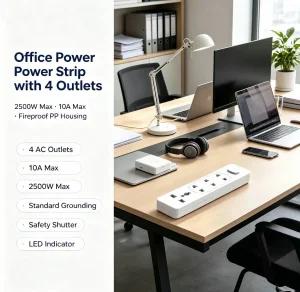
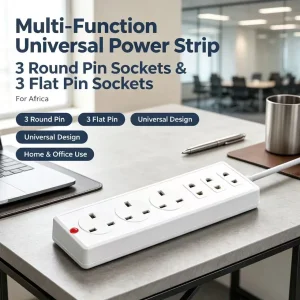
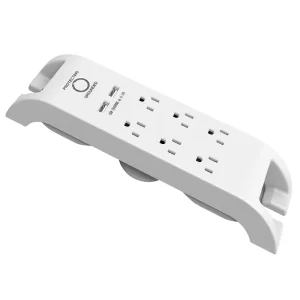
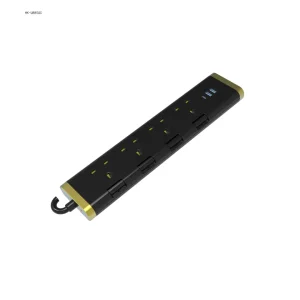
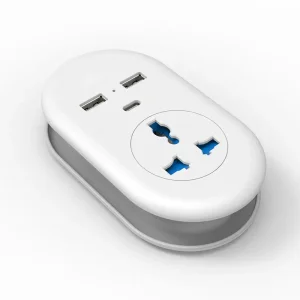
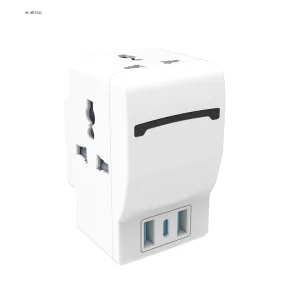
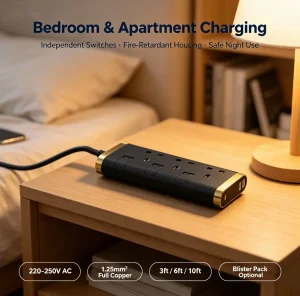
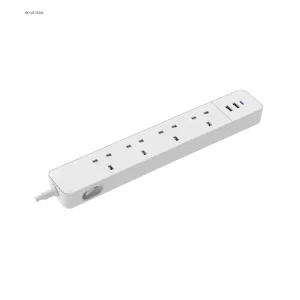
Flame-Retardant OEM Socket Assemblies (Series I)
Engineered with 750°C/850°C glow-wire resistant polycarbonate and phosphor bronze contacts for global power safety.
30+ Years of Precision Flame-Retardant Engineering
Operating from our 30,000+ m² self-owned campus in Jiangmen, Guangdong, Heikki integrates high-performance polymer compounding with automated precision stamping and safety validation.
UL94 V-0 Compound Synthesis
We compound modified Polycarbonate (PC) and Polybutylene Terephthalate (PBT) matrices utilizing non-halogenated organophosphorus additives. This ensures zero dripping, rapid self-extinguishing in under 10 seconds, and compliance with strict environmental directives.
In-House Precision Tooling
With proprietary mold design and CNC tooling centers, our factory maintains tight dimensional tolerances (±0.02mm) across structural housings, shutter guides, and modular gang frames to eliminate thermal deformation risks under sustained mechanical stress.
In-House Testing Laboratory
Certified under ISO 9001, ISO 14001, and ISO 45001, our facility runs routine 750°C and 850°C Glow Wire Flammability Index (GWFI) tests, ball pressure heat tests, high-voltage dielectric checks, and surge clamp endurance testing on every batch.
Flame-Retardant Polymer Trends & Sourcing Demands
Navigating technical transitions, sustainability restrictions, and high-density electrical architecture requirements across tier-1 consumer and enterprise supply chains.
Halogen-Free Environmental Mandates (RoHS & REACH)
Traditional brominated flame retardants are systematically phased out due to toxic dioxin formation during combustion. OEM buyers across the EU and North America now mandate polymeric phosphorus-nitrogen formulations that yield low smoke density and non-corrosive off-gassing, safeguarding both consumer lives and sensitive integrated circuitry.
High-Power GaN Fast Charging Integration
Modern power strips integrate PD 38W to 100W GaN charging modules directly alongside AC busbars. Compact form factors generate elevated localized operating temperatures, requiring housing polymers with Heat Deflection Temperatures (HDT) exceeding 130°C and specialized CTI (Comparative Tracking Index) ratings above 250V to prevent arc tracking.
Total Landed Cost vs. Substandard Resin Risks
Procuring power strips fabricated from recycled or unverified regrind resins poses catastrophic liabilities, including failed customs border safety sweeps, high return rates, and product liability lawsuits. Heikki provides comprehensive material batch traceability, ensuring full virgin resin integrity with UL-yellow card documentation.
Demands for Severe Mechanical Impact Durability
Enterprise, logistics, and data infrastructure applications require enclosures that withstand high mechanical stress. Combining flame-retardant chemistry with impact-modifying elastomers enables our enclosures to pass IK07/IK08 drop tests without cracking, preserving full electrical isolation during heavy commercial duty.
Macro-Sector Power Distribution Solutions
Tailored flammability, surge dissipation, and mechanical shielding solutions mapped to diverse operational environments worldwide.
Consumer & Residential
Child-safety shutters requiring >40N insertion force, coupled with self-extinguishing housing polymers rated for 750°C glow-wire exposure. Provides absolute peace of mind across home workstations, entertainment consoles, and dorm rooms.
Commercial & Enterprise IT
Multi-gang switched systems integrating multi-stage MOV surge suppression (up to 1800 Joules). Shielded with high-thermal-stability enclosures that support continuous 13A/16A electrical loads across continuous enterprise duty cycles.
Industrial & Construction
Heavy-duty 14AWG to 12AWG pure copper extension cords paired with high-impact, abrasion-resistant, and self-extinguishing polymer bodies. Built to endure harsh jobsite friction, power tool startup currents, and continuous operational demands.
Market-Specific Regulatory & Compliance Assurance
Pre-tested and engineered to satisfy mandatory electrical safety and combustion standards across 60+ countries and sovereign jurisdictions.
Flame-Retardant Technology Roadmap
Leading continuous compound innovation, intelligent thermal monitoring, and low-carbon circular polymer integration.
Advanced Bio-Based FR
Synthesizing renewable bio-polycarbonates coupled with natural mineral flame retardants to achieve 40% lower carbon footprints while maintaining strict UL94 V-0 ratings.
Embedded Thermal Sensors
Integrating direct busbar NTC micro-thermistor sensors with auto-cutoff microcontrollers to sever circuit load prior to reaching plastic degradation thresholds.
Graphene Thermal Additives
Dispersion of graphene nanoplatelets within structural polymers to simultaneously enhance thermal dissipation by 35% and boost flexural impact resistance across extreme climates.
Closed-Loop Recyclability
Pioneering fully depolymerizable flame-retardant compound architectures that enable infinite closed-loop recycling without loss of flammability performance or mechanical yield.
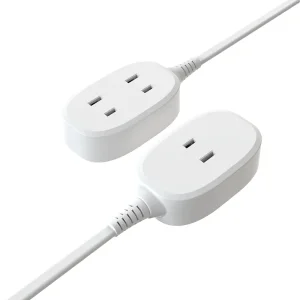
Flame-Retardant OEM Socket Assemblies (Series II)
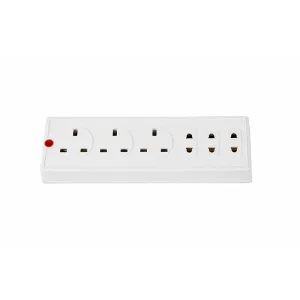
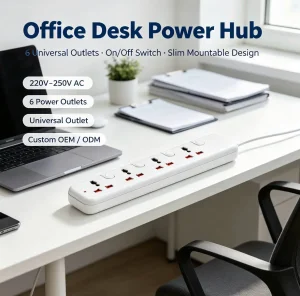
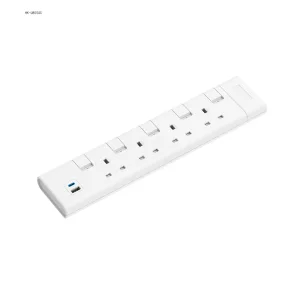
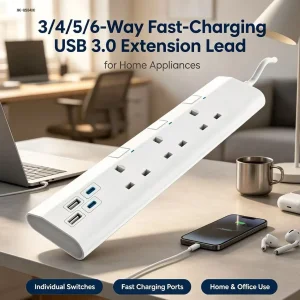
Explore our full line of multi-standard extension leads, travel adapters, and rapid charging hubs built for extreme durability.
Frequently Asked Technical Questions
Detailed answers regarding polymer compounding, OEM customization options, and global safety standards for engineering leads and procurement directors.
What flammability rating is standard across Heikki extension sockets and adapters?
All our exterior structural housings are injection-molded using virgin PC or PC/ABS alloys compliant with the UL94 V-0 flammability standard. When exposed to an open flame, vertical burning ceases within 10 seconds without producing flaming drips. Furthermore, internal socket contact carriers pass the strict 750°C (and optionally 850°C) Glow Wire Flammability Index (IEC 60695-2-12) to prevent ignition during abnormal overload or loose-pin contact arcing.
How does your factory verify that resin batches maintain flame-retardant integrity?
Under our ISO 9001 quality framework, every raw polymer shipment undergoes Incoming Quality Control (IQC) testing in our in-house lab. We utilize Melt Flow Index (MFI) testing, Differential Scanning Calorimetry (DSC), and sample bar burn chamber tests. We enforce a zero-tolerance policy against unauthorized regrind or unverified filler dilution, ensuring structural rigidity, color fastness, and flammability protection across mass production runs.
Can OEM buyers specify custom compound colors without compromising UL94 V-0 ratings?
Yes. We collaborate directly with accredited masterbatch compounders using carrier-compatible, non-halogenated pigments. Whether your project requires standard pure white, matte industrial black, or specific Pantone corporate branding colors, we pre-validate flammability compliance before tooling production molds.
What is the typical OEM/ODM project timeline from initial CAD concept to mass export?
A standard OEM modification (custom cord length, housing color, logo printing, and retail packaging) takes 25 to 35 days. For complete ODM developments involving custom mechanical tooling and bespoke PCB charging circuits, our engineering cycle typically spans 40 to 60 days, including 3D rapid prototyping, pilot steel mold tooling, pre-compliance laboratory safety validation, and official certification filing.
How do your power strip designs maintain child-safety and internal contact pressure over years of use?
Our internal conductive busbars are stamped from premium, high-elasticity phosphor bronze rather than inferior recycled brass. Phosphor bronze maintains consistent contact pressure over more than 10,000 insertion cycles, preventing micro-arcing and overheating. Additionally, our integrated dual-action child protection shutters require simultaneous two-pin or three-pin insertion forces exceeding 40N, fully preventing foreign object insertion.