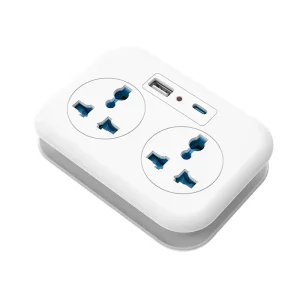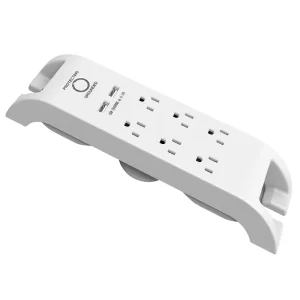
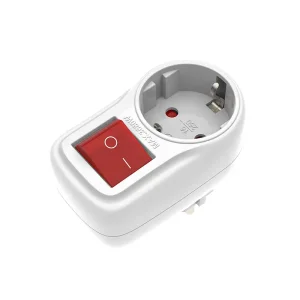
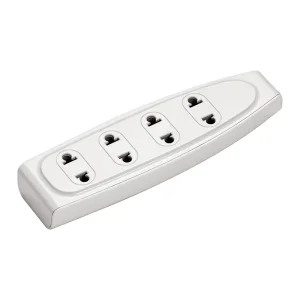
Precision Multi-Port Extension Leads & Wall Extenders
Compliant with SASO, BS 1363, CE, and TISI standards, optimized for commercial hubs and heavy domestic duty cycles.
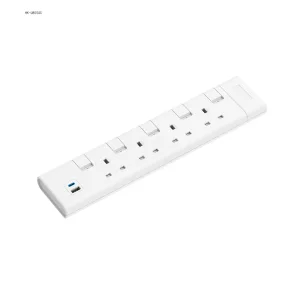
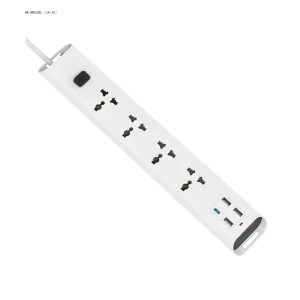
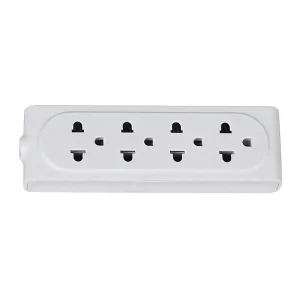
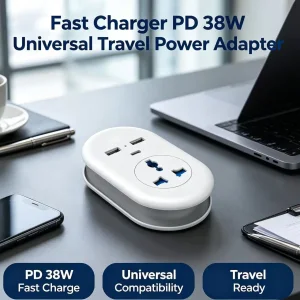
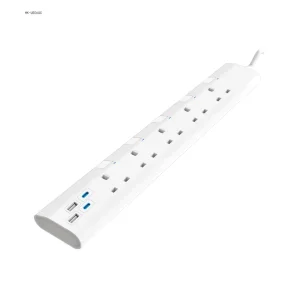
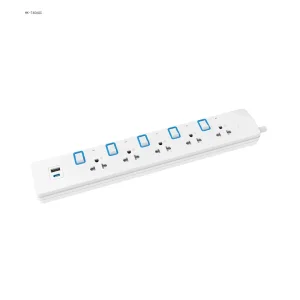
Engineering Architecture & Global Deployment Realities
A deep dive into high-load commercial distribution, contact spring metallurgy, and structural fire protection.
In modern industrial and enterprise facilities, an extension lead socket is an integral node of local power distribution. The transition to high-density consumer electronics, GaN-integrated chargers, and variable motor-driven industrial appliances demands tight adherence to structural tolerances, transient voltage surge suppression (TVSS), and contact metallurgy. The standard commercial extension cord has evolved into an active power control hub incorporating metal oxide varistors (MOVs), gas discharge tubes (GDTs), and specialized thermal cutoff fuses.
When sourcing through international procurement channels, commercial buyers must balance plug-and-socket geometry compliance (such as BS 1363, Schuko CEE 7/7, TISI 2432-2555, and NEMA 5-15R) against high-duty cycle degradation. Lower-tier manufacturers rely on brass plating or brass-clad steel, which suffers stress relaxation and elastic fatigue under constant insertions. Premium OEM production focuses on tin-phosphor bronze alloy (CuSn6.5) stamping strips. This provides excellent contact retention, minimal resistance buildup, and minimal heat rise during continuous maximum-load runs (up to 16A/250V or 15A/125V).
Phosphor Bronze Internal Busbars
Unlike riveted designs prone to thermal hot-spots, advanced extension leads use an integrated, non-riveted copper punching architecture. Elastic deformation tolerance exceeding 10,000 cycles ensures firm clamping and low Joule heating.
750°C Glow-Wire Flame Retardance
Enclosures are molded using modified polycarbonate (PC) and polybutylene terephthalate (PBT) resin, compliant with UL94 V-0 and IEC 60695-2-11 standards, preventing spontaneous ignition under prolonged arcing or overload.
Three-Line TVSS Surge Attenuation
Protective circuitry includes Line-to-Neutral (L-N), Line-to-Ground (L-G), and Neutral-to-Ground (N-G) surge paths. Coordinated MOVs deliver transient absorption thresholds from 1050 to over 4000 Joules for clean power output.
Localized Applications & Commercial Installation Scenarios
Addressing unique spatial, mechanical, and electrical requirements across major industries.
Corporate IT Infrastructure
Deployment in server racks, under-desk raceways, and modular meeting hubs. Requires zero-cross interference, individual switch control, and high-wattage capacity for display setups and network equipment.
Industrial Warehousing
Heavy-duty, high-impact cable drums and socket banks. High-spec rubberized Neoprene cables (H07RN-F or SJTW 14AWG) provide resistance to oils, abrasion, and cyclic bending loads on assembly floors.
Smart Modern Residential
Sleek, low-profile designs built for compact domestic spaces. Child safety shutters prevent accidental finger insertion, while built-in Smart IC USB-C ports eliminate bulky wall-wart adapters.
Hospitality & Travel Hubs
Universal socket configurations configured for international hotel rooms, airport lounges, and transport terminals. Fully tested to clamp international plug variations without arcing or voltage drops.
China Factory Ecosystem: Scalable, Resilient, & Vertically Integrated
Jiangmen Heikki Technology: Leveraging the Pearl River Delta's industrial matrix to minimize risk and lead times.
Supply chain security is a core requirement for enterprise-level retail programs, tier-one electrical distributors, and international private labels. Operating from Jiangmen, Guangdong—the center of China's electrical hardware ecosystem—our manufacturing facility features deep vertical integration. From raw electrolytic copper drawing, thermoplastic injection molding, and PCB surface-mount technology (SMT) to automated wire harness crimping and computerized burn-in validation, every step is kept in-house.
This vertical approach mitigates cross-tier delivery bottlenecks, protects raw material quality (reducing oxygen-free copper purity variance), and insulates procurement cycles from market volatility. Our ISO 9001, ISO 14001, and ISO 45001 production facilities maintain strict statistical process controls (SPC) to achieve an overall defect rate below 80 PPM across 5 million production cycles.
Regional Compliance & International Market Clearance
Navigating regional certification pathways with complete test documentation and technical design files.
Middle East: SASO / SQM & G-Mark
Fully compliant with SASO 2815, SASO IEC 60884-1, and Gulf Conformity (G-Mark) standards. Units feature high-amperage cutoffs, tamper-proof shutters, and thermal endurance ratings engineered for high-temperature desert environments.
Europe & UK: CE, UKCA & BS 1363
Complies with the Low Voltage Directive (LVD 2014/35/EU), RoHS 2.0, REACH, and BS 1363-2. Products utilize certified internal sand-filled ceramic fuses, high breaking capacity, and fully isolated shutter plates.
Asia-Pacific: TISI, KC & PS Mark
Precision-engineered tooling satisfies the Thai TISI 2432-2555 standard, Korean KC safety profiles (KSC 8305), and Philippine PS Quality markings. Every export batch is backed by official accredited laboratory CB test certificates.
Technical Roadmap: Smart Power & Next-Gen Topologies
The technological evolution of high-efficiency commercial extension boards from 2026 to 2030.
GaN Fast-Charging Integration
Direct deployment of 65W to 140W Gallium Nitride (GaN) fast-charge modules within power strip frames, lowering thermal generation and providing multi-protocol USB Power Delivery (PD 3.1) output.
Matter & Zigbee Smart Mesh
Migration from Wi-Fi modules to universal Matter-over-Thread and Zigbee 3.0 ecosystems. Delivers local energy monitoring, zero-standby parasitic consumption, and interoperability across building platforms.
Solid-State Electronic Breakers
Transition from bi-metallic spring breakers to microcontroller-driven solid-state circuit breaking. Enables microsecond-level fault isolation, arc flash containment, and digital trip sensitivity customization.
PCR Resins & Halogen-Free Alloys
Deployment of Post-Consumer Recycled (PCR) engineering plastics alongside zero-halogen, lead-free connection alloys, meeting stringent EU Ecodesign requirements while preserving flame resistance.
Frequently Asked Questions for B2B Importers
Essential technical, certification, and commercial insights for sourcing extension leads from China.
What are the key technical differences between brass-strip and phosphor-bronze socket contacts?
How does integrated solid copper busbar punching outperform traditional wire soldering?
Which test protocols does your in-house laboratory execute for global compliance?
What OEM and ODM customization parameters are supported for private label orders?
What is your production lead time, and how are shipping logistics managed?
Commercial Power Solutions: Certified International Assemblies
Ruggedized socket arrays, universal travel transformers, and multi-socket units for commercial and household use.