
North America Series
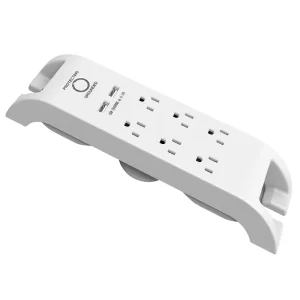
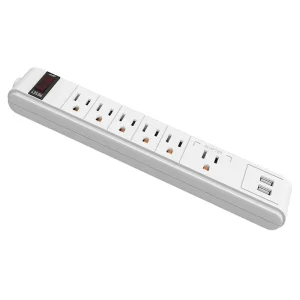
OEM China Suppliers Factory 125V/15A Power Strip with 6 AC Outlets & 2 USB Ports, Surge Protected for North America Manufacturer, Suppliers
Product Specs & RFQ
Explore our production-ready series configured with hybrid USB high-efficiency power modules, robust flame-retardant housings, and certified surge suppression.
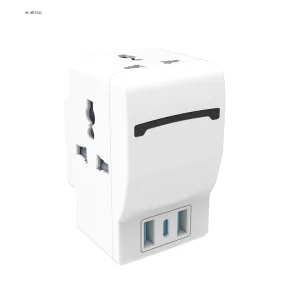
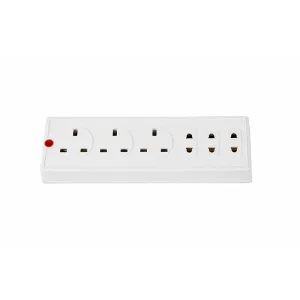
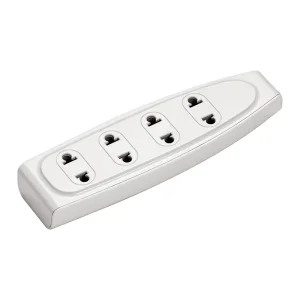
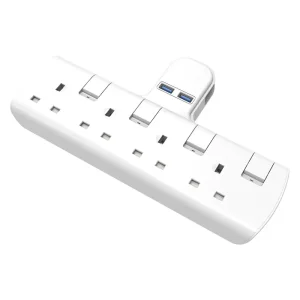
Demystifying dynamic load sharing, synchronous rectification, GaN thermal boundaries, and protocol handshaking in modern electrical power distribution equipment.
The contemporary 2 USB-A + 1 USB-C configuration relies on a centralized microcontroller (MCU) coordinating multi-port fast charging protocols (USB PD 3.0/PPS, QC 4.0+, AFC, FCP). When the USB-C port engages a high-drain device (such as an ultrabook or high-capacity tablet drawing 30W to 65W), the internal dynamic protocol controller monitors secondary feedback loop voltages in sub-millisecond intervals. It automatically renegotiates down-regulated rail profiles across the twin USB-A ports (typically 5V/2.4A or shared 15W), ensuring total module TDP never exceeds rated thermal envelopes while eliminating transient under-voltage brownouts.
Traditional silicon MOSFET flyback circuits in power strips are severely restricted by switching frequency limitations (rarely exceeding 65 kHz to 100 kHz) and elevated heat generation, requiring voluminous aluminum heatsinks that compromise form factor safety. By engineering Third-Generation Gallium Nitride (GaN III) high-electron-mobility transistors (HEMTs) directly into our high-voltage conversion stage, switching frequencies elevate to 300+ kHz. This reduces magnetics (transformer core size) by up to 55%, achieves an ultra-high power conversion efficiency of 93.8%, and keeps housing surface temperature rises well below 45K above ambient.
Output stability across the USB-A and USB-C stages is governed by high-performance synchronous buck converter ICs and low-ESR solid polymer aluminum capacitors. Compared to traditional Schottky diode rectification, synchronous rectification drops forward conduction losses drastically. This ensures continuous, ripple-suppressed direct current (Vpp < 80mV across maximum load transitions), preventing premature battery degradation, touch-screen phantom touches, or radio-frequency electro-magnetic interference (EMI) on sensitive connected micro-electronics.
Technical Differentiator: While low-cost market alternatives wire USB-A and USB-C lines in brute-force parallel without isolated channel feedback—triggering continuous resets, overheating, and dangerous current cross-feeding—Heikki implements tri-channel galvanic isolation with independent secondary synchronous switches and discrete current sense resistors (R010).
| Operating Topology Parametric | Legacy Low-Tier Solution | Heikki Industrial GaN / Smart-IC Standard | Target Standard Compliance Benefit |
|---|---|---|---|
| Port Distribution | Parallel passive resistive divider | Digital MCU Protocol Negotiation (CC1/CC2 lines) | IEC 62680-1-2 / USB PD 3.0 Spec Compliance |
| USB-C Standalone Output | 5V / 2.1A (10.5W Max) | 5V/3A, 9V/3A, 12V/2.5A, 15V/2A, 20V/1.5A (30W-65W PD) | Universal laptop/smartphone fast-charging capability |
| Dual USB-A Concurrent Load | Shared 5V / 2.4A unregulated sag | Intelligent 5V / 3.4A (17W) Auto-Balancing with OCP | Protects low-draw IoT wearables & peripherals |
| Thermal Rise at Full Load (100h) | ΔT > 65°C (Polymer casing degradation risk) | ΔT < 38°C (Monitored via NTC thermistor sensor) | Exceeds UL 94-V0 & IEC 60884-1 thermal aging thresholds |
| No-Load Standby Consumption | > 250 mW (Continuous parasitic draw) | ≤ 75 mW (Ultra-low eco standby sleep mode) | Complies with EU ErP Lot 7 & US DOE Level VI Mandates |
Balancing the aggressive regulatory push for universal Type-C hardware with massive entrenched legacy USB-A consumer hardware across international business channels.
Directive (EU) 2022/2380 legally codifies USB Type-C as the mandatory interface for handheld consumer electronics across the 27 EU member states, driving corporate purchasers and retail conglomerates to demand embedded USB-C ports on all power strips and wall receptacles. However, premature transition to exclusively Type-C sockets causes catastrophic customer friction, as hundreds of millions of legacy USB-A devices remain active in commercial and residential ecosystems.
Enterprise IT infrastructure, POS terminals, wireless barcode scanners, medical test equipment, desk lamps, smart home monitors, and Bluetooth accessories overwhelmingly ship with USB Type-A terminated cables. Offering two USB-A ports alongside a primary high-wattage USB-C port provides an optimal bridging architecture that prevents consumer obsolescence, lowers return rates, and maximizes market longevity across both developed and developing regions.
Modern hotels, shared workspaces (co-working venues), conference centers, and tertiary education campuses specify integrated power hubs into desks and headboards. Procurement directors prioritize the 2 USB-A + 1 USB-C configuration because it accommodates guests with the latest iPhone/MacBook hardware via USB-C PD, while simultaneously powering legacy wearables and peripherals via dual USB-A, eliminating guest complaints and the need for adapter lending programs.
Transitioning from pure AC strips to integrated multi-port charging assemblies represents the highest margin expansion opportunity for B2B brand owners. By incorporating the 2A1C module into standard BS 1363, CEE 7/7, or NEMA 5-15 strips, brands elevate product perceived value by 40% to 65%, while unit manufacturing bill-of-materials (BOM) increases only fractionally thanks to Chinese modular PCBA economies of scale.
How regional grid conditions, ergonomic placement, and specialized commercial standards dictate the mechanical and electrical parameters of multi-port extension socket assemblies.
Deployment: Open-plan corporate headquarters, financial trading floors, software engineering cubicles.
Mechanical & Electrical Architecture: Under-desk or clamped desk-edge mounting strips engineered with 1.5mm² (16 AWG / 14 AWG) oxygen-free pure copper cabling to prevent voltage drop over long extensions. The USB-C port supplies direct 45W-65W PD to power laptops without an external AC power brick, while the two USB-A ports maintain active power for noise-canceling headsets, wireless mice, or biometric security dongles. Integrated 10kA surge arresters shield micro-circuitry against inductive switching spikes generated by commercial HVAC and chiller systems.
Deployment: Five-star guest suites, boutique hotel nightstands, airport premium lounges.
Mechanical & Electrical Architecture: Compact, aesthetically refined housings utilizing fire-rated Bayer PC with high matte finishes resistant to scratch marks and harsh chemical cleaning detergents. Ports are oriented vertically with micro-beveled entries to facilitate smooth blind insertion in low-light environments. Includes child-protective internal safety shutters rated for >10,000 insertion cycles and soft-spectrum warm white LED status indicators that indicate circuit protection without disturbing guest sleep.
Deployment: Hardware QA benches, automated testing fixtures, factory floor telemetry stations.
Mechanical & Electrical Architecture: Heavy-gauge aluminum alloy or flame-retardant polyamide chassis with dedicated grounding terminals and individual double-pole disconnect switches. The 2 USB-A + 1 USB-C circuit features enhanced Class B common-mode EMI filtering and transient voltage suppression (TVS) diodes, preventing test-bench oscilloscopes and micro-controllers from suffering false signal triggers or high-frequency clock corruption.
Deployment: African, South Asian, and Middle Eastern distribution markets.
Mechanical & Electrical Architecture: Equipped with ultra-wide input switching power supplies (90V–264V AC, 47Hz–63Hz) capable of withstanding severe brownouts, voltage spikes up to 300V AC without dielectric breakdown, and lightning-induced transients. The integrated USB charging module features self-recovering thermal fuses and metal oxide varistors (MOVs) rated for upwards of 1,050 Joules dissipation, preventing fires in regions lacking stable electrical substation regulation.
How Jiangmen Heikki Technology Co., Ltd. leverages three decades of tooling mastery, in-house metallurgical stamping, and automation to maintain unbeatable OEM/ODM delivery cycles.
Unlike trading entities or assembly workshops that outsource vital sub-components, Heikki controls the full production value chain under one roof in Jianghai District, Jiangmen. From high-precision mold fabrication and injection molding with virgin flame-retardant polycarbonates (UL 94-V0) to high-speed progressive die stamping of phosphor bronze contacts (C5191) and fully automated Surface Mount Technology (SMT) for the 2A1C USB boards, vertical consolidation protects lead times and guarantees end-to-end quality consistency.
A critical failure point in substandard extension sockets is point-to-point internal hand soldering that breaks down under mechanical vibration and heavy thermal loads. Heikki utilizes stamped, continuous unibody phosphor bronze (CuSn6) conductor busbars with exceptional elasticity, minimal electrical resistance, and high oxidation resistance. This unibody construction guarantees superior contact force even after 15,000 continuous plug cycles, completely preventing localized thermal runaway, arcing, and contact fatigue.
Situated at the heart of the Greater Bay Area hardware cluster, Heikki maintains immediate access to upstream premium raw material refiners, masterbatch chemical producers, and certified electronics semiconductor suppliers. Our just-in-time (JIT) supplier agreements, coupled with comprehensive strategic reserves of core controller ICs, allow us to mitigate global supply disruptions, maintain flat pricing across fluctuating commodity cycles, and scale monthly capacity above 500,000 units.
International electrical distribution is among the most heavily regulated consumer hardware sectors. Heikki guarantees full conformity with national standards across 60+ global territories.
Mandatory for the United Kingdom, Singapore, Malaysia, and Hong Kong. Requires integrated child safety shutters actuated solely by the insertion of the earth pin, compliant fused plugs with ceramic high-breaking-capacity ASTA-certified links, and minimum creepage and clearance distances across the integrated 2 USB-A + 1 USB-C PCB to prevent dangerous flashovers.
Stringent climate and thermal endurance parameters under Saudi and GCC standards require products to withstand high ambient operational heat (50°C continuous). Our internal USB PCBA circuits use 105°C-rated electrolytic caps and custom silicon thermal encapsulants (potting glue) that pass Gulf Notified Body audits without thermal shutdown.
Harmonized safety testing under EN 62368-1 for the internal audio/video, information, and communication technology power supply stage, alongside rigorous EN 55032 Class B conducted and radiated emission controls. Fully compliant with RoHS 2011/65/EU and REACH (EC 1907/2006) chemical bans on phthalates and heavy metals.
South-East Asian electrical grids require strictly certified plug-body dimensions, mechanical chord-anchorage retention pull testing exceeding 100 Newtons, and specific overload circuit breakers that automatically trip upon load overcurrent to prevent residential wire ignition.
Where commercial power distribution is headed over the next five years, and how our R&D pipeline ensures long-term market competitiveness for OEM brand clients.
The transition from 100W maximum USB Power Delivery to 140W (28V/5A) and up to 240W (48V/5A) under the USB PD 3.1 Extended Power Range spec is revolutionizing workspace hardware. Heikki's Advanced R&D engineering lab is developing integrated 140W GaN IV modules that enable a power strip to power gaming workstations, professional video rendering laptops, and medical diagnostic rigs directly from the primary Type-C port, completely superseding traditional heavy brick transformers.
Future iterations of our 2A1C industrial power boards integrate Matter-over-Thread and Wi-Fi 6 low-energy microcontrollers. This allows corporate enterprise facilities to monitor power draw per individual outlet and per USB port in real time. Facility managers can track carbon footprints, identify parasitic power loads, and implement automated scheduled power cutoffs during non-operational hours directly via commercial building management software (BMS).
Aligning with European Corporate Sustainability Due Diligence Directives (CSDDD), our material engineers are pioneering the mass production adoption of post-consumer recycled (PCR) polycarbonates (up to 75% recycled content) and bio-circular resins derived from sustainable non-food biomass, maintaining full glow-wire flame retardancy (850°C V-0 compliance) while cutting the embodied carbon footprint by over 38% per manufactured unit.
How international brands, hardware retailers, and tier-1 electrical distributors collaborate with Heikki's engineering departments to commercialize bespoke 2A1C power strips.
We review your target market geometry (UK Type G, EU Type F/E, US Type B, Universal), voltage tolerances, cord gauge (H05VV-F, SJT), master switch mechanics, surge suppression joule rating, and the specific USB-A / USB-C wattage envelope (e.g., 20W PD vs. 65W GaN dual fast charging).
Our industrial design and mechanical engineering teams generate precise 3D CAD assemblies, simulating thermal distribution, tooling draft angles, snap-fit tolerances, internal copper strip clearance, and drop-impact resistance before cutting tool steel, saving weeks of unnecessary mold revisions.
In-house CNC mold centers produce prototype tooling within 21 to 30 days. Functional working samples undergo pre-compliance screening in our accredited laboratory, verifying temperature rise, short-circuit recovery, EMC emission, and endurance before official third-party certification filing.
Mass assembly operates strictly under ISO 9001, ISO 14001, and ISO 45001 disciplines. Every single production unit passes through four mandatory end-of-line Automated Test Equipment (ATE) checks: 100% dielectric withstand voltage (Hi-Pot), continuity testing, ground bonding, and computerized USB fast-charge protocol validation.
Clear, unequivocal answers on minimum order quantities, compliance timelines, thermal safeguards, and custom tooling capabilities directly from our factory directors.
Explore additional heavy-duty extension strips, long-reach industrial cables, and universal travel adapters engineered for professional procurement.
Partner directly with Jiangmen Heikki Technology Co., Ltd. Leverage our 30+ years of electrical engineering excellence, in-house tooling, and worldwide regulatory compliance to manufacture best-in-class power products for your market.