
Top Simultaneous Multi-Device Charging Systems
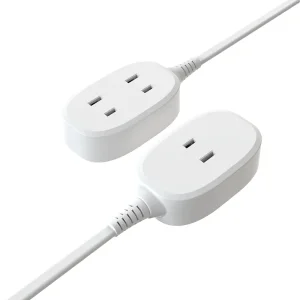
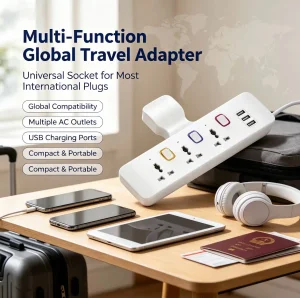
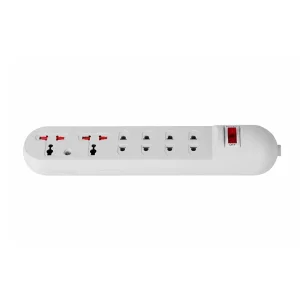
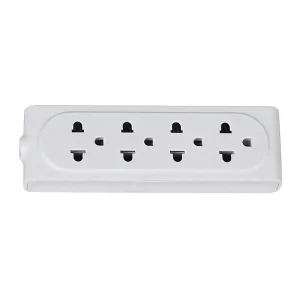
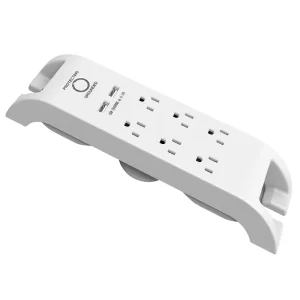
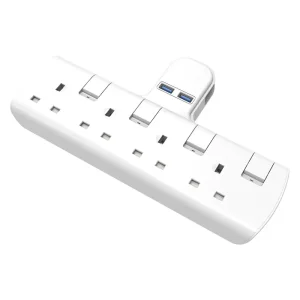
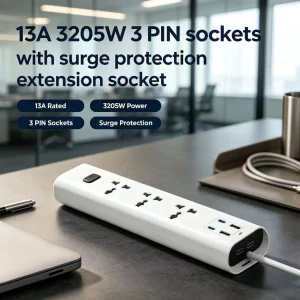
Engineered for sustained concurrent electrical loads. These production-ready models integrate high-throughput USB architectures, universal pin arrays, and reinforced mechanical contact designs.
The Global Proliferation of Concurrent Charging Nodes
Analyzing cross-continental trends in commercial workstation electrification, IoT terminal density, and the fundamental transition toward consolidated AC/DC charging arrays.
The Device Proliferation Dilemma
Modern workspaces and industrial test cells no longer operate on single-terminal paradigms. The convergence of laptops, ancillary displays, tablets, communication gear, and testing peripherals has escalated the average desk load to 6–9 active devices. Traditional single-wall sockets generate hazardous daisy-chained setups ("octopus wiring"), producing localized thermal stress and regulatory violations. Professional-grade simultaneous charging infrastructure solves this bottleneck through unified, single-enclosure load distribution.
Thermal Dissipation at Peak Amperage
When multiple high-current devices draw power concurrently, internal resistance across copper buses, soldered junctions, and step-down transformer matrices generates substantial heat. Substandard power strips experience contact degradation, spring fatigue, and catastrophic housing softening. High-grade simultaneous charging manufacturing mandates phosphor bronze integrated busbars, thick copper traces (>0.7mm), and flame-retardant thermoplastics rated UL94 V-0 to maintain continuous ambient stability under full rated wattage.
Industrial Reliability vs. Retail Fragility
Global procurement teams face widespread market distortion caused by lightweight, consumer-grade adapters marketed for industrial duty. True commercial reliability requires verified cycles (>10,000 insertion/extraction events), mechanical strain relief capable of withstanding >100N axial pulling forces, and multi-stage metal oxide varistor (MOV) surge arresters engineered to clamp lightning-induced microsecond spikes before downstream silicon damage occurs.
Engineering Architecture of Simultaneous High-Output Charging
A granular look at the mechanical structure, conductive alloy selection, and semiconductor topology necessary to deliver continuous, unthrottled concurrent electrical service.
| Engineering Dimension | Heikki Industrial Simultaneous Strip | Conventional Commercial Power Strip | Procurement Advantage |
|---|---|---|---|
| Internal Conductor | One-piece stamped tin-phosphor bronze busbar (QSn6.5-0.1, thickness ≥0.6mm) | Fragmented brass strips joined by manual wire solder points | Eliminates 90% of internal hot spots |
| Housing Flame Retardance | Polycarbonate (PC) glow-wire tested to 850°C, UL94 V-0 certified self-extinguishing | Recycled ABS or PP, ignition resistance limited to 650°C | Complete fire-spread prevention |
| Power Management IC | Dynamic GaN-III smart re-allocation microcontroller with synchronous rectification | Fixed-rail step-down buck circuit without negotiation handshakes | Zero drops or sudden port reboots |
| Contact Spring Retention | Elastic memory retention >15,000 insertion cycles with minimum 1.5N clamping force | Rapid spring fatigue <2,000 cycles, resulting in arcing | Zero arcing, long operating lifetime |
| Surge Suppression Matrix | Three-mode (L-N, L-PE, N-PE) MOV array with thermal fuse cutoff up to 1,800 Joules | Single low-energy varistor or none, no thermal disconnection mechanism | Guaranteed downstream device safety |
Dynamic Power Splitting
Unlike basic multi-port chargers that reset power delivery across all ports when a new device connects, advanced simultaneous modules employ intelligent algorithmic power negotiation. The onboard controller reassesses power contract matrices without resetting active VBUS negotiation rails, maintaining video output continuity and uninterrupted cloud sync across connected enterprise machines.
Child-Protection Shutter Safety
High-voltage line safety requires mechanical shutter systems with minimum 40N dual-pole interlocking resistance. Single-pin insertion (such as a foreign metal object or child’s probe) is physically blocked by an internal spring slide gate. The shutter only disengages when simultaneous, symmetrical pressure is applied by matched line-neutral prongs, fulfilling international safety criteria under BS 1363, IEC 60884, and TISI 2432.
Thermally Decoupled Architecture
By physically segregating the high-voltage AC bus channels from the low-voltage DC switch-mode transformers, Heikki eliminates thermal cross-coupling. Sensitive microcontrollers and electrolytic capacitors remain insulated from heat radiating off heavy-load AC pathways, guaranteeing rated lifespans of >50,000 operating hours at 40°C continuous ambient temperature.
Integrated Overload Circuit Breaker
When concurrent load exceeds 13A or 16A thresholds (depending on regional target configuration), the integrated bi-metallic switch executes a clean physical air-gap disconnection within 1.5 seconds. The manual reset mechanism allows instant recovery once the excess load is detached, eliminating fuse replacement downtime across commercial settings.
Localized Applications & Specialized Operational Environments
Examining field installations across high-density enterprise hubs, hospitality infrastructure, medical facilities, and global trade transit points.
Enterprise Trading & Tech Workspaces
In high-density financial dealing rooms and software hubs, individual staff members command multiple 4K displays, docked notebooks, IP phones, and secondary handheld units. Outfitting workbenches with Heikki 6-to-8 outlet simultaneous distribution strips featuring dual Type-C PD eliminates bulky AC/DC converter bricks, reduces under-desk cable clutter, and ensures seamless compliance with municipal fire safety codes.
Premium Hospitality & Executive Lounges
International guests carry a heterogeneous mix of US Type-A, Europlug Type-C/F, and British Type-G power connectors. Deploying universal multi-tap adapters with certified safety shutters allows multinational hoteliers to accommodate international visitors safely without distributing ungrounded travel pucks that endanger facility wiring or spark property insurance audits.
Manufacturing Test & Calibration Benches
Industrial testing benches demand heavy-duty extension units capable of handling continuous reactive and inductive loads from soldering stations, oscilloscopes, variable DC power units, and inspection cameras. Heikki's reinforced 3C 14AWG and 3G 1.5mm² pure copper cords maintain nominal line voltage across 5m to 10m extension lengths, mitigating catastrophic voltage drop.
Global Retail & Private-Label Merchandising
For supermarket chains, consumer electronics distributors, and DIY retail brands, product returns driven by blown fuses or incompatible plug tolerances destroy gross margins. Heikki's turn-key ODM programs provide pre-certified, localized packaging, barcoding, and regional approval documentation that lets private-label owners expand with minimal compliance overhead.
China Factory Supply Chain Resilience & Manufacturing Efficiency
How Jiangmen Heikki Technology harnesses vertical integration, Pearl River Delta electrical clustering, and automated quality controls to deliver unmatched stability.
30,000+ m² Integrated Factory Footprint
Unlike trading entities that outsource tooling, molding, and wire extrusion to uncoordinated third parties, Heikki concentrates all critical manufacturing vectors within its self-owned facility in Jiangmen, Guangdong. Controlling high-speed multi-cavity injection machines, stamping presses, copper annealing, and automated packaging lines delivers consistent component-level dimensional accuracy across high-volume production batches.
Pearl River Delta Industrial Cluster Velocity
Situated within the world's most concentrated electrical engineering cluster, Heikki sources virgin polymer granulate, ultra-pure copper cathodes (Cu ≥99.95%), and high-reliability microchips within a 50km logistics radius. This physical proximity cushions production schedules from global raw material shocks, slashes procurement lead times by 35%, and allows continuous factory operation even through peak seasonal shifts.
In-House Testing Laboratory (CNAS Criteria)
Before batch release, representative production units undergo grueling mechanical, electrical, and environmental stress profiles inside our dedicated test center. Testing covers glow-wire flammability (IEC 60695-2-11), temperature rise limits at rated current, plug-cord flex resistance (>10,000 cycles at 90° angle), insulation breakdown resistance under 2,000V AC dielectric checks, and salt-spray corrosion tests on metallic pins.
Engineering Roadmap: 2025–2030 Power Infrastructure
Anticipating structural shifts in charging protocols, wide-bandgap semiconductors, and intelligent bi-directional power delivery within the commercial extension socket sphere.
USB-PD 3.1 EPR (240W Standard)
The transition from standard 100W USB-C to Extended Power Range (EPR) up to 48V/5A (240W) enables direct simultaneous powering of high-performance mobile workstations, engineering gaming rigs, and electric mobility tools directly from the power strip, eliminating external AC-DC transformer units entirely.
Gallium Nitride (GaN-IV) Integration
Future iterations embed fourth-generation GaN semiconductors into ultra-slim form factors. Operating frequencies exceeding 500 kHz dramatically shrink inductive magnetic components, permitting 100W+ multi-port charging arrays in power strips no thicker than 22mm, all while running 15°C cooler than legacy silicon equivalents.
Matter-Over-Thread Energy Metering
Commercial energy audit protocols are pushing extension strips toward connected micro-nodes. Heikki is integrating Matter-compliant, sub-gigahertz wireless telemetry into individual sockets, allowing corporate facility directors to remotely monitor carbon footprint, identify vampire power drain, and isolate failing equipment through building management systems (BMS).
Solid-State Circuit Protection
Replacing traditional electro-mechanical bimetallic strips and sacrificial thermal MOVs, solid-state micro-breakers disconnect short circuits in under 5 microseconds. This ultra-fast response prevents line voltage sag and eliminates sparks, setting a higher bar for explosive industrial or cleanroom environments.
Localized Support & Global Compliance Assurance
A rigorous breakdown of regional electrical norms, plug-pin geometry, and certification frameworks supported across Heikki's production lines.
Middle East: SASO, SQM & GCC
Strict compliance with SASO 2815, SASO 2203, and G-Mark Gulf technical regulations. All extension sockets exported to Saudi Arabia, UAE, and Oman include fused BS-style 13A plugs, integral individual switches with double-pole switching, safety shutters, and valid Saber electronic registration documentation.
Southeast Asia: TISI, PS, SS 145
Tailored manufacturing matching Thailand TISI 2432-2555 standards, Singapore SAFETY Mark (SS 145), Malaysia SIRIM (MS 589), and Philippines PS mark requirements. Units feature authentic flame-retardant housings, proper cable cross-sections (3x1.0mm² or 3x1.5mm²), and market-matched pin dimensions.
Europe & UK: CE, UKCA & KC
Full conformance to Low Voltage Directive (LVD 2014/35/EU), RoHS 2.0 hazardous substance restrictions, UK Electrical Equipment (Safety) Regulations 2016, and South Korean KC safety standards. Testing encompasses thermal cycle endurance, toxic substance limits, and EMC radio-frequency suppression.
Americas: 125V / 15A Standards
NEMA 5-15R configurations built with heavy-gauge 14AWG or 12AWG SJT cables, polarized plug grounding prongs, integrated 15A resettable circuit breakers, and tested to meet UL 1363 and UL 1449 transient voltage surge suppression requirements.
Frequently Asked Technical & Sourcing Questions
Comprehensive answers addressing mold customization, electrical engineering parameters, MOQ structures, and quality verification protocols.
What engineering safeguards prevent voltage drop and thermal buildup during simultaneous charging?
How does Heikki manage OEM/ODM custom tooling and market-specific modifications?
Can Heikki assist with complex multi-country certification submissions?
What is the difference between universal sockets and market-specific plug outlets?
What are the minimum order quantities (MOQ) and production lead times?
What in-line quality control steps occur during mass assembly?
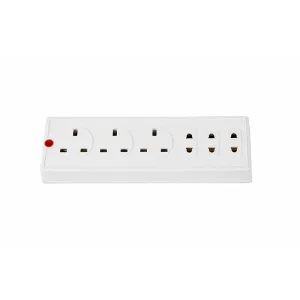
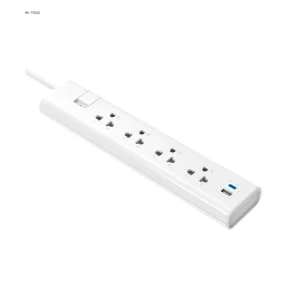
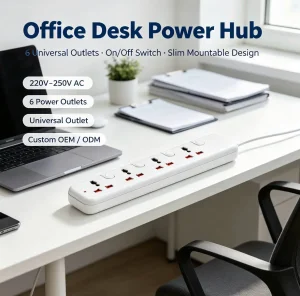
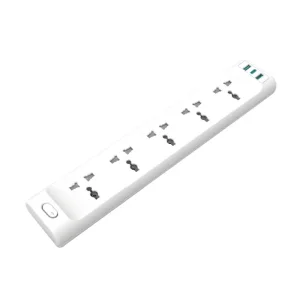
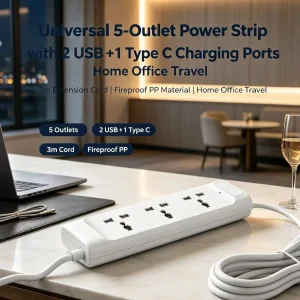
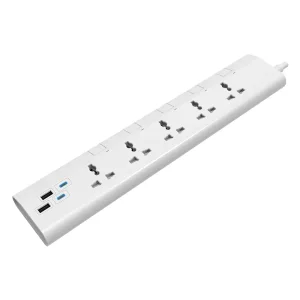
High-Efficiency Concurrent Power Distribution Sockets
Factory-direct commercial power boards engineered with independent switching, hybrid universal pin apertures, and robust flame-retardant enclosures.
Partner with an Established Electrical Engineering Manufacturer
Eliminate intermediary markups and secure documented regulatory compliance. Leverage Heikki's 30+ years of tooling, injection molding, and assembly expertise for your brand's global expansion.