
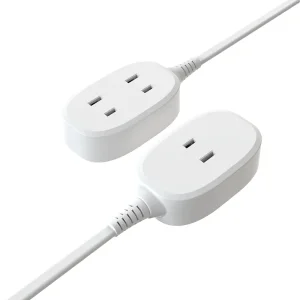
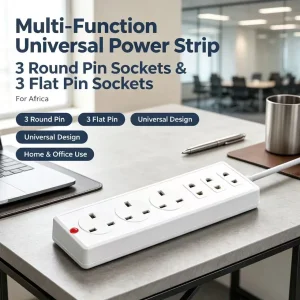
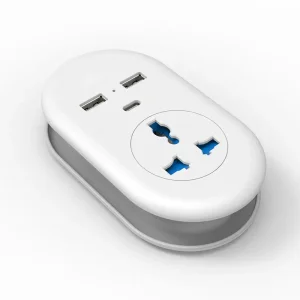
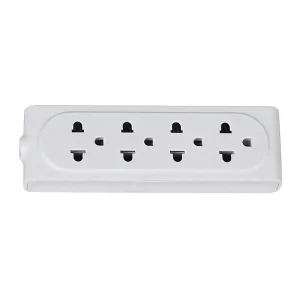
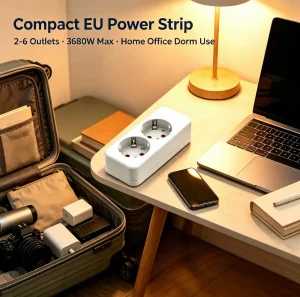
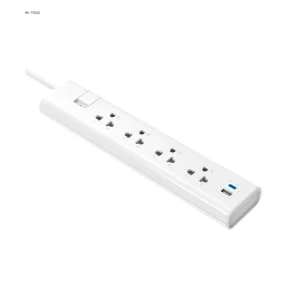
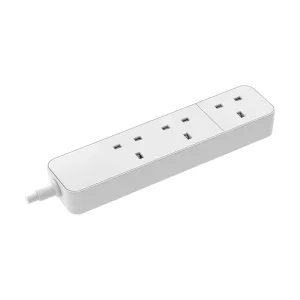
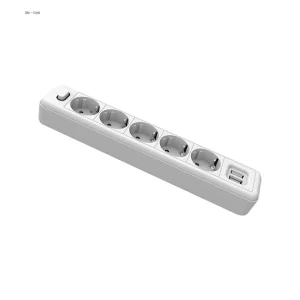
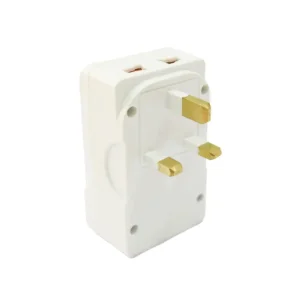
Featured Heavy-Duty Flame Retardant PC Power Units
Our high-dielectric, glow-wire certified flame retardant polycarbonate casings ensure complete self-extinguishing behavior within 10 seconds, safeguarding mission-critical appliances and international smart installations.
Engineering Polycarbonate for Harsh Electrical and Thermal Extremes
Understanding the molecular degradation pathways of engineered polymers during electrical arc ignition, thermal surges, and short-circuit faults.
1. The Chemistry of Halogen-Free Flame Retardant (HFFR) Polycarbonate
Polycarbonate (PC) is inherently a high-performance amorphous engineering thermoplastic characterized by an elevated glass transition temperature ($T_g \approx 145^\circ\text{C}$), superior optical clarity, exceptional dimensional stability, and high impact toughness ($>650\,\text{J/m}$ notched Izod). However, in critical electrical power distribution infrastructures—such as extension sockets, multi-gang power strips, industrial cord reels, and GaN charger chassis—unmodified polycarbonate exhibits vulnerability under continuous abnormal thermal stress, glow-wire thermal contact, and sustainment of open flashover arcs.
As an advanced Flame Retardant PC Material Manufacturer & Factory, Jiangmen Heikki Technology utilizes advanced micro-dispersed organophosphorus esters (such as resorcinol bis(diphenyl phosphate) / RDP and bisphenol-A bis(diphenyl phosphate) / BDP) compounded alongside anti-dripping fluorinated polyolefins. During thermal decomposition triggered by electrical arcing or extreme current overloads, our proprietary PC matrix activates a condensed-phase charring mechanism. The organophosphorus agents catalytically dehydrate the polymer chain backbone, rapidly forming an insulating, swollen intumescent carbonaceous char barrier. This crust prevents oxygen permeation to the underlying polymer layers, insulates the core substrate from radiative heat, and eliminates flaming drips—fully satisfying the rigorous UL94 V-0 benchmark at 0.75mm–1.5mm wall thicknesses.
Thermal Char Integrity
Condensed-phase protective barriers suppress pyrolysis gases, ensuring that flaming droplets do not ignite surgical absorbent cotton underneath during vertical flammability combustion testing.
High Comparative Tracking
Enhanced formulation achieving CTI (Comparative Tracking Index) values greater than 600 Volts (PLC Class 0), preventing electrical treeing and conductive path breakdown in humid or dusty atmospheres.
Eco-Friendly Low Smoke Toxicity
100% compliant with EU RoHS and REACH SVHC criteria. Zero polybrominated diphenyl ethers (PBDE) or toxic halogens, preventing corrosive halogen acid gas emissions during fire emergencies.
Global Landscape: Navigating Regional Fire Safety Standards
Power supply architectures demand strict compliance with localized fire-safety standards, differing climatic thresholds, and load density profiles across North America, the UK, the Middle East, and the ASEAN region.
North America (UL 1363 / UL 94)
Focuses heavily on direct flame resistance, fault current survivability, and 14AWG heavy-duty copper conductors. PC compounds must withstand rigorous 5VA/5VB vertical flame tests and structural ball drop impact without structural rupture.
UK & Gulf (BS 1363 / SASO / GCC)
Demands compliance with BS 1363-2 and SASO 2815, requiring severe glow-wire tests (GWEPT up to 850°C for parts supporting live contacts). Formulations must prevent tracking in high-temperature, hyper-arid, or high-humidity desert environments.
European Union (CE / EN 60884-1)
Mandates non-flammable consumer housings through IEC 60695-2-11 Glow Wire Flammability Index (GWFI) testing, low smoke release, and complete elimination of restricted heavy metals and brominated/chlorinated flame retardants.
ASEAN & East Asia (TISI / PS / KC)
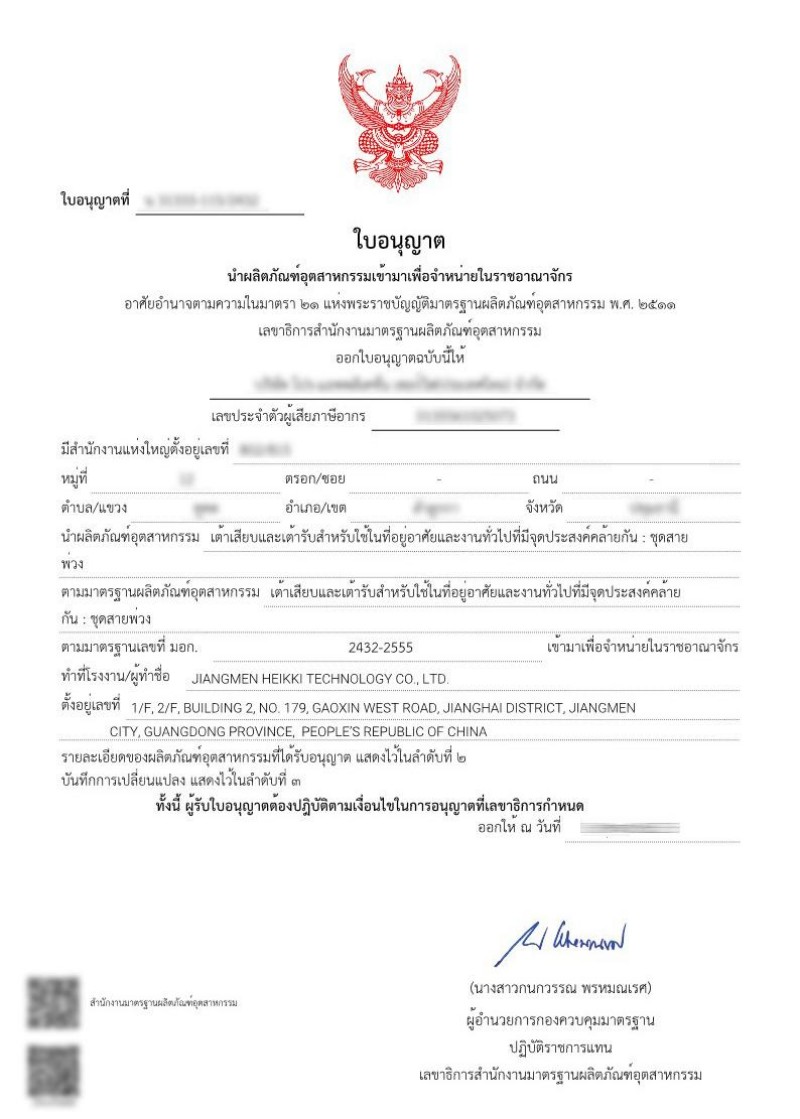
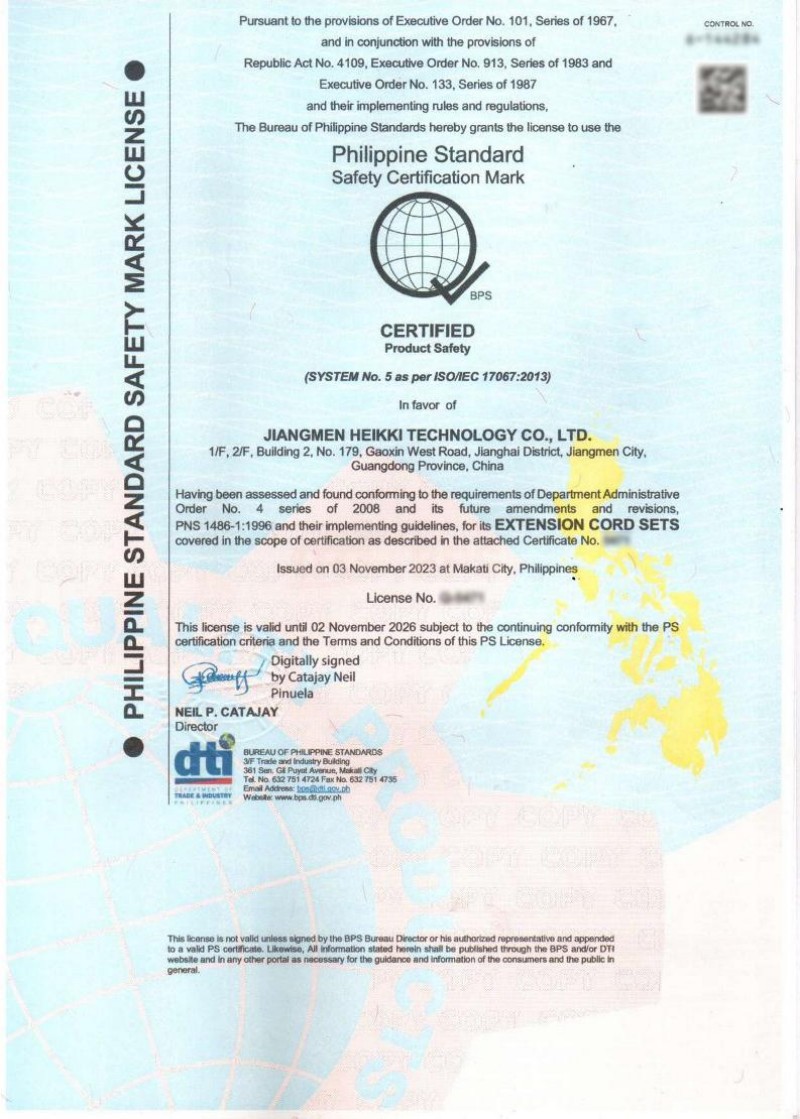
Extreme tropicalization testing: Thailand (TISI 2432), South Korea (KC), and Philippines (PS Mark) require materials that resist moisture absorption, hydrolytic degradation, and environmental stress cracking under high relative humidity.
Jiangmen Heikki Technology Co., Ltd. - Manufacturing Excellence
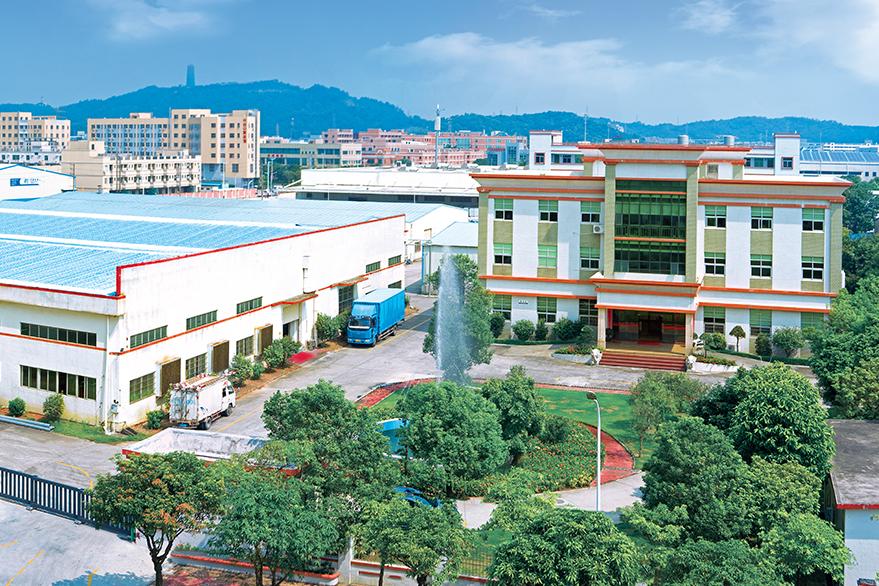
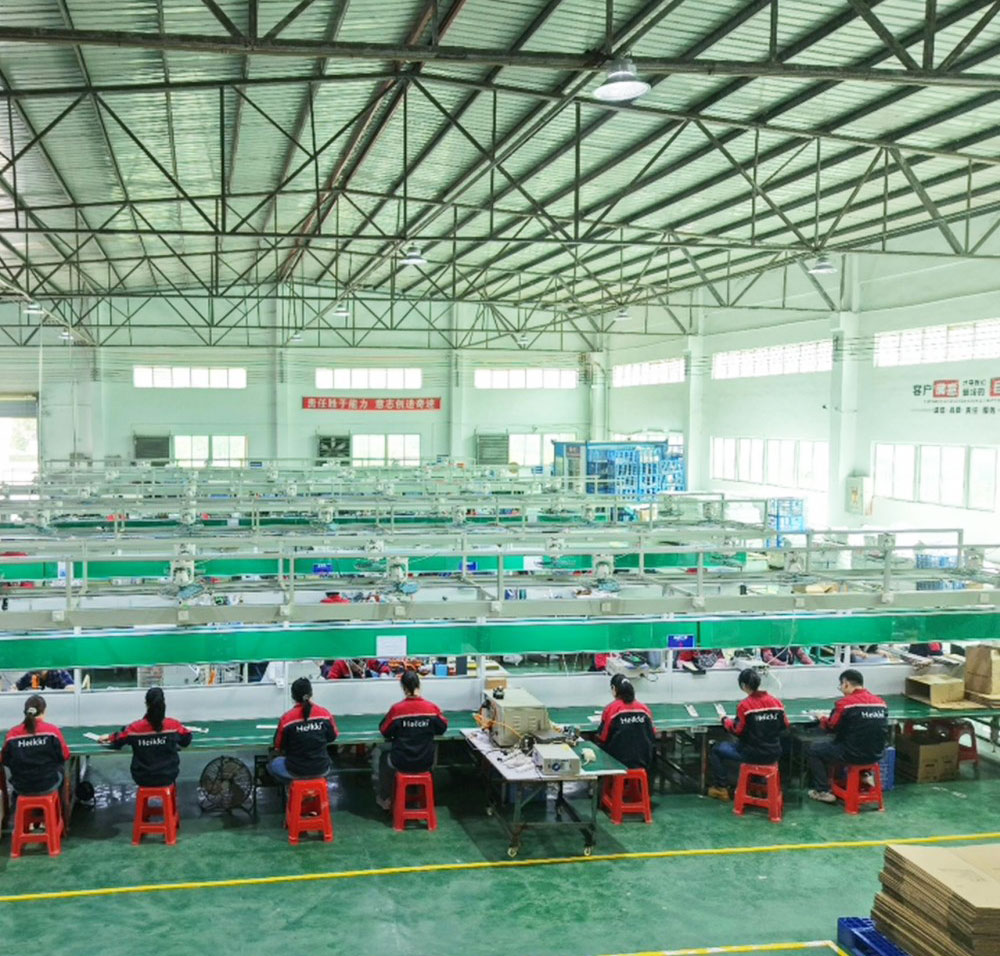
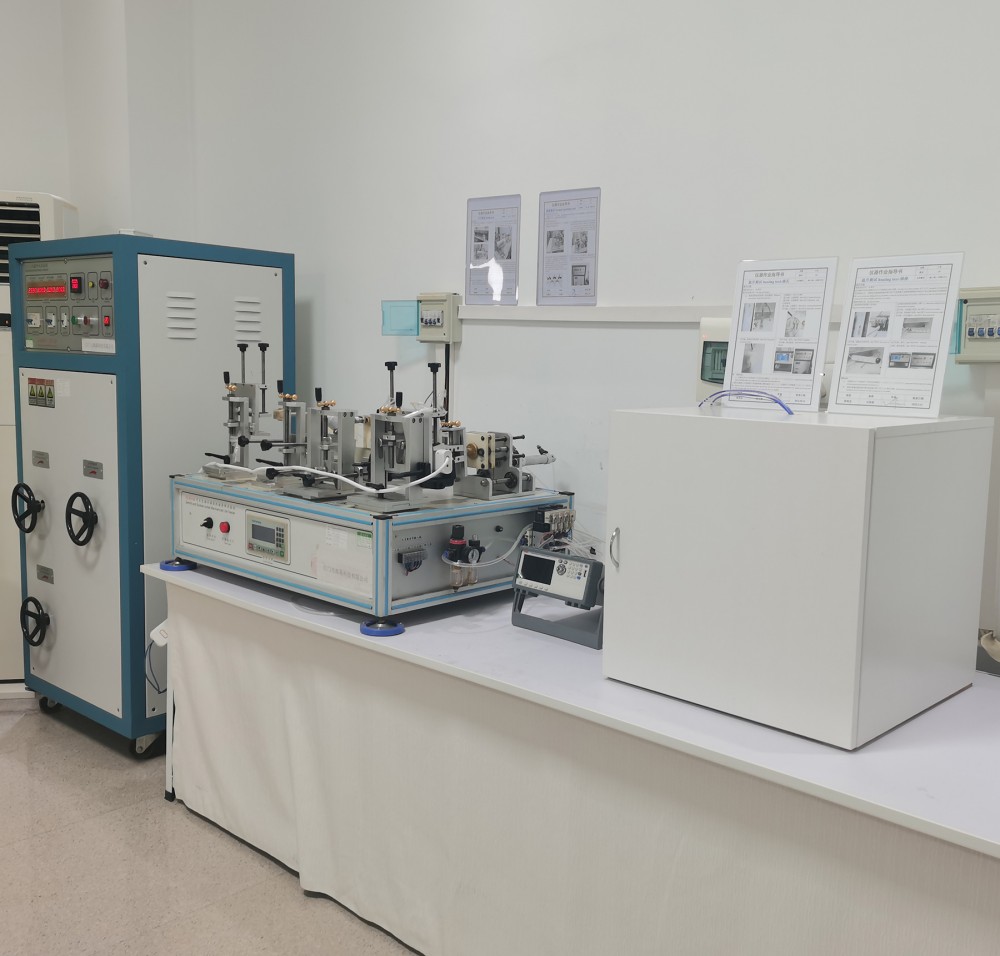
Founded in 1995, our self-owned 30,000+ m² Jiangmen facility houses an integrated end-to-end production ecosystem: precision mold design, high-tonnage injection molding, copper busbar stamping, automated assembly, and an in-house electrical testing laboratory.
End-to-End Quality Engineering: From Resin Pellet to Certified Product
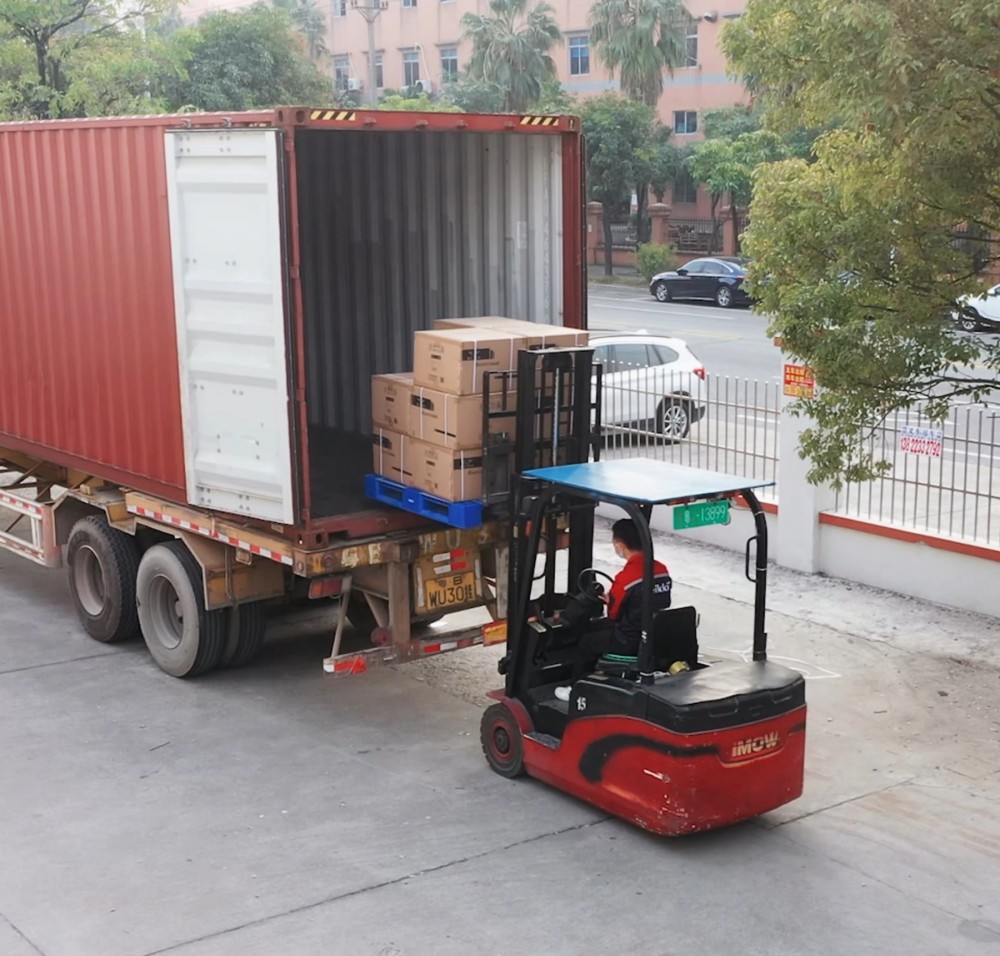
Heikki manufactures over 5,000,000 extension socket units annually, serving Tier-1 retail brands and industrial importers across 60+ countries. Recognized as an official High and New-Technology Enterprise (HNTE) and a certified "Specialized, Refined, Unique, and Innovative" SME, our manufacturing process eliminates outsourced supply chain uncertainties.
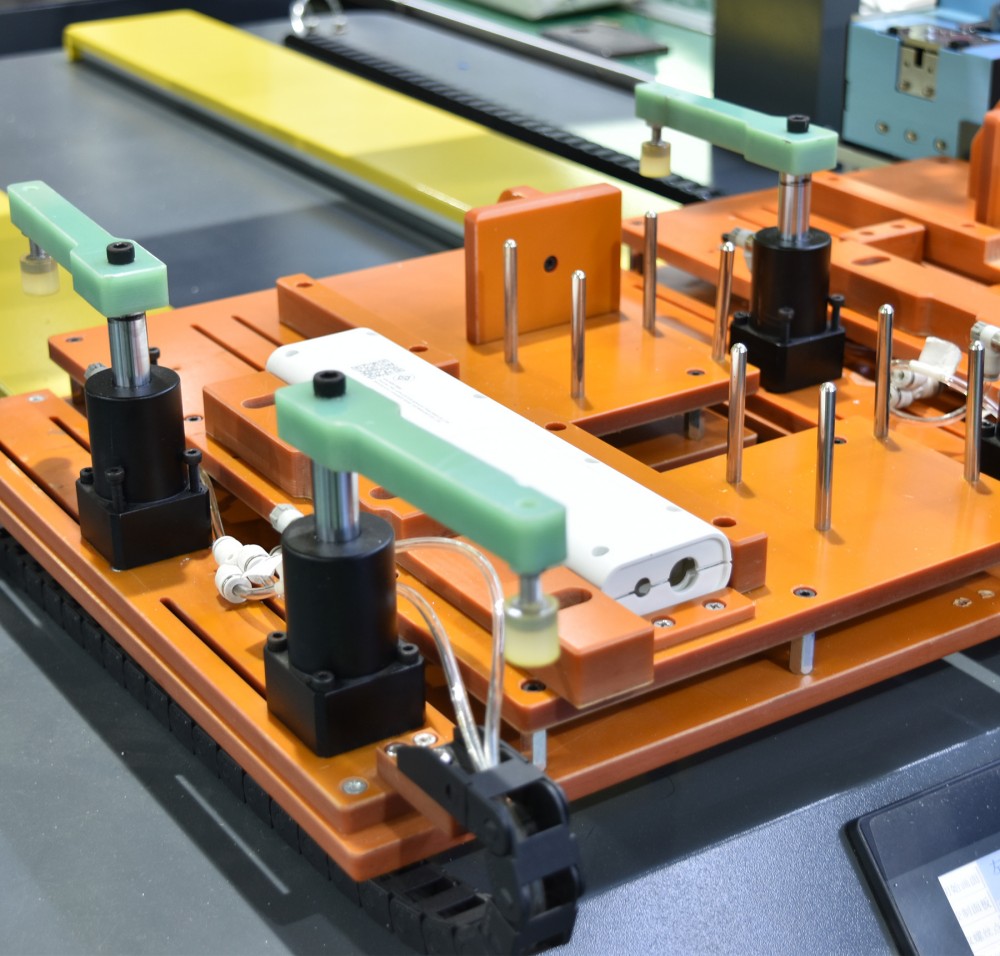
Raw flame retardant PC resin batches are subjected to differential scanning calorimetry (DSC) and melt flow rate (MFR) inspections before reaching the automated mold processing lines. Using closed-loop, microprocessor-controlled injection presses, we maintain consistent mold wall temperatures and precise clamping pressures. This ensures our power strip chassis prevent internal molded-in stress, resist sink marks around thick structural screw bosses, and achieve dimensional tolerances within $\pm 0.05\,\text{mm}$.
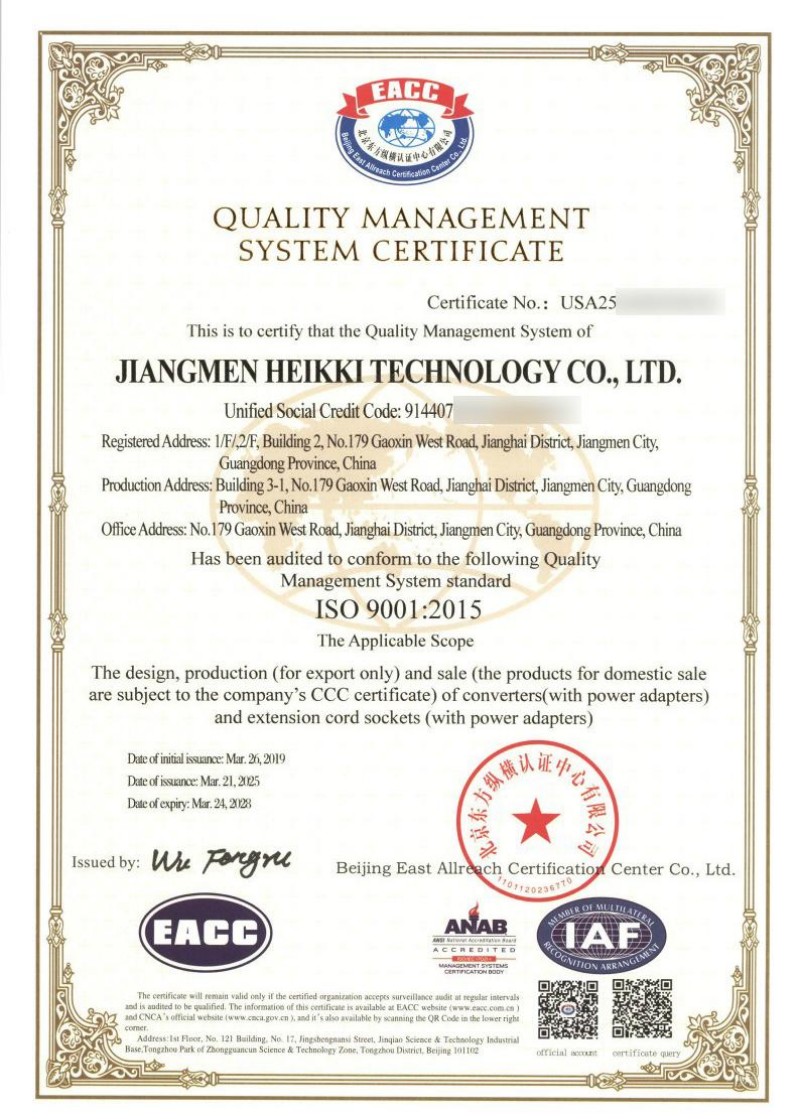
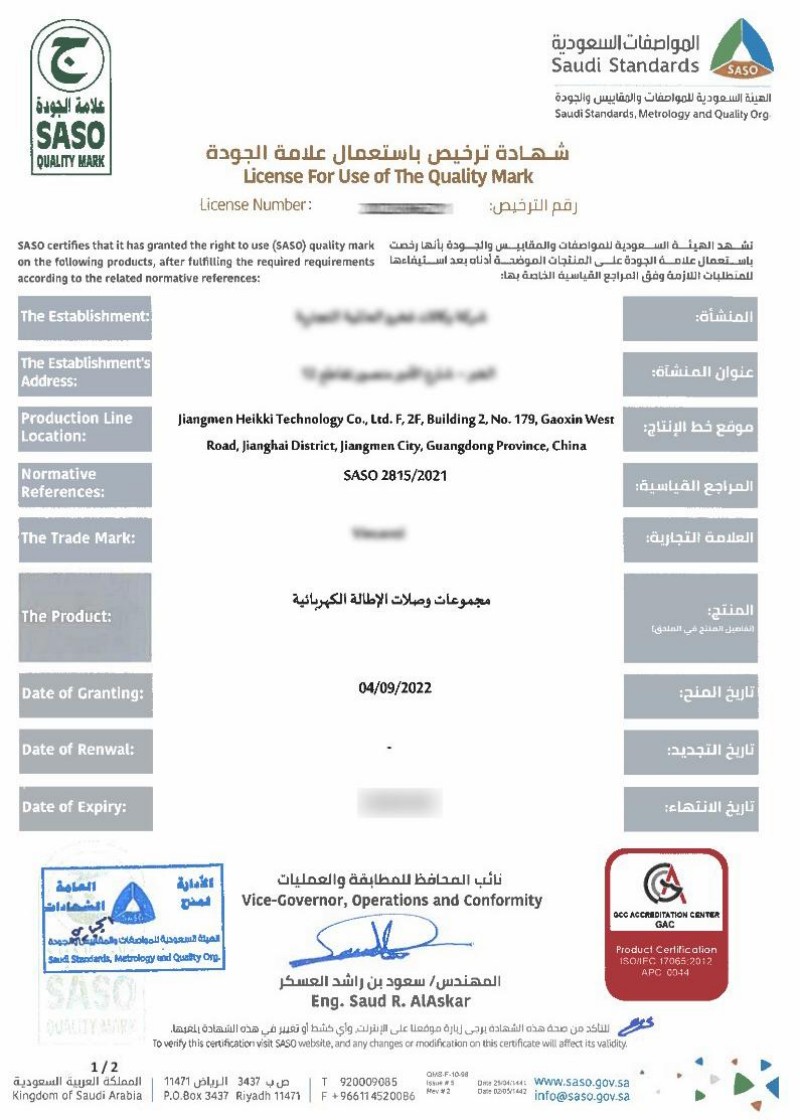
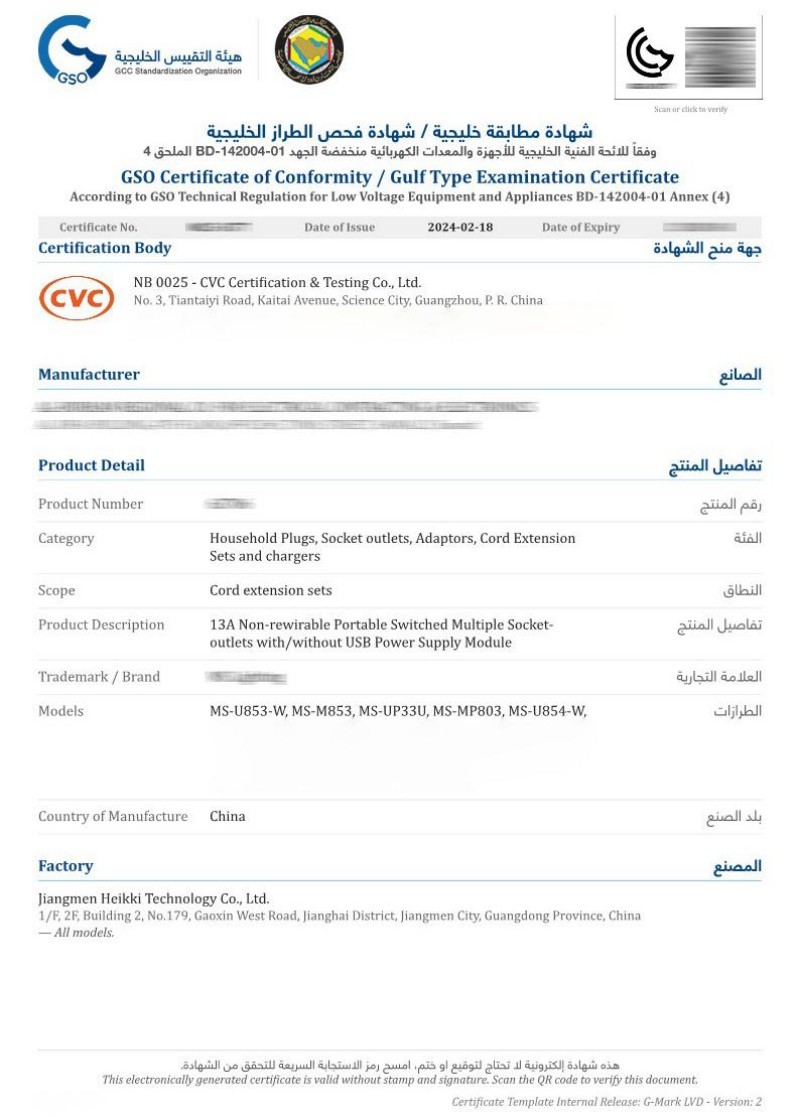
Global Accreditations, Test Reports, and International Patents
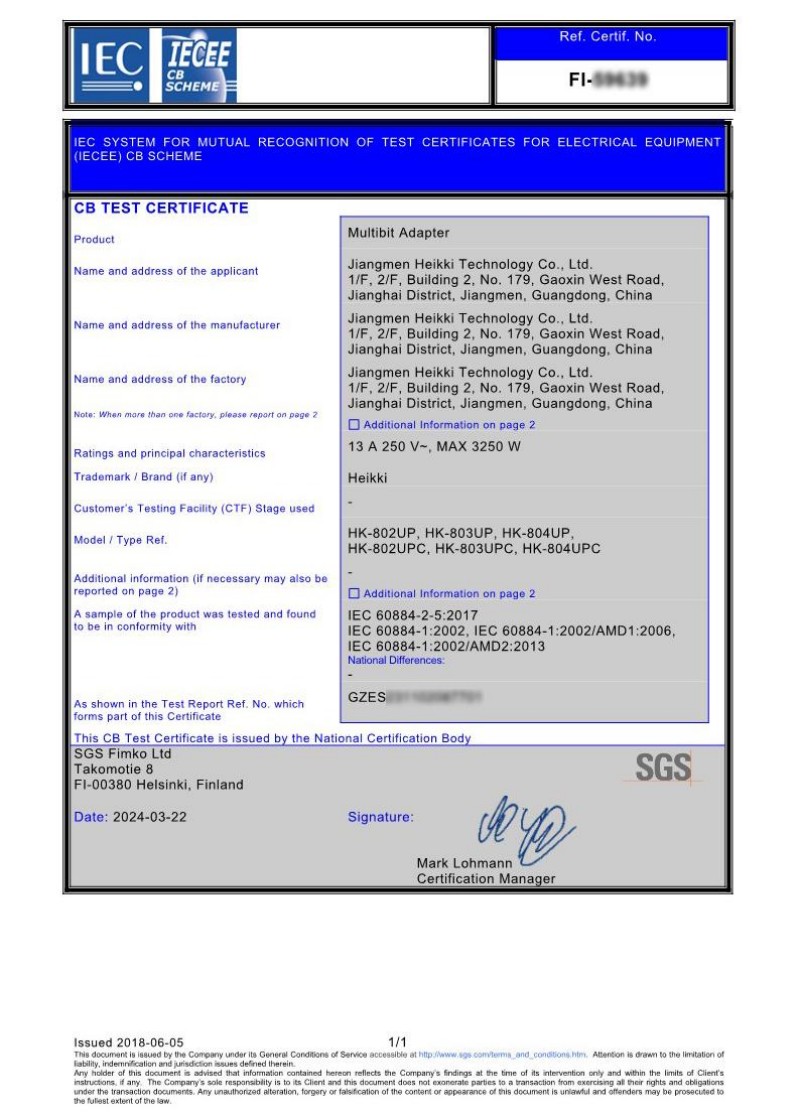
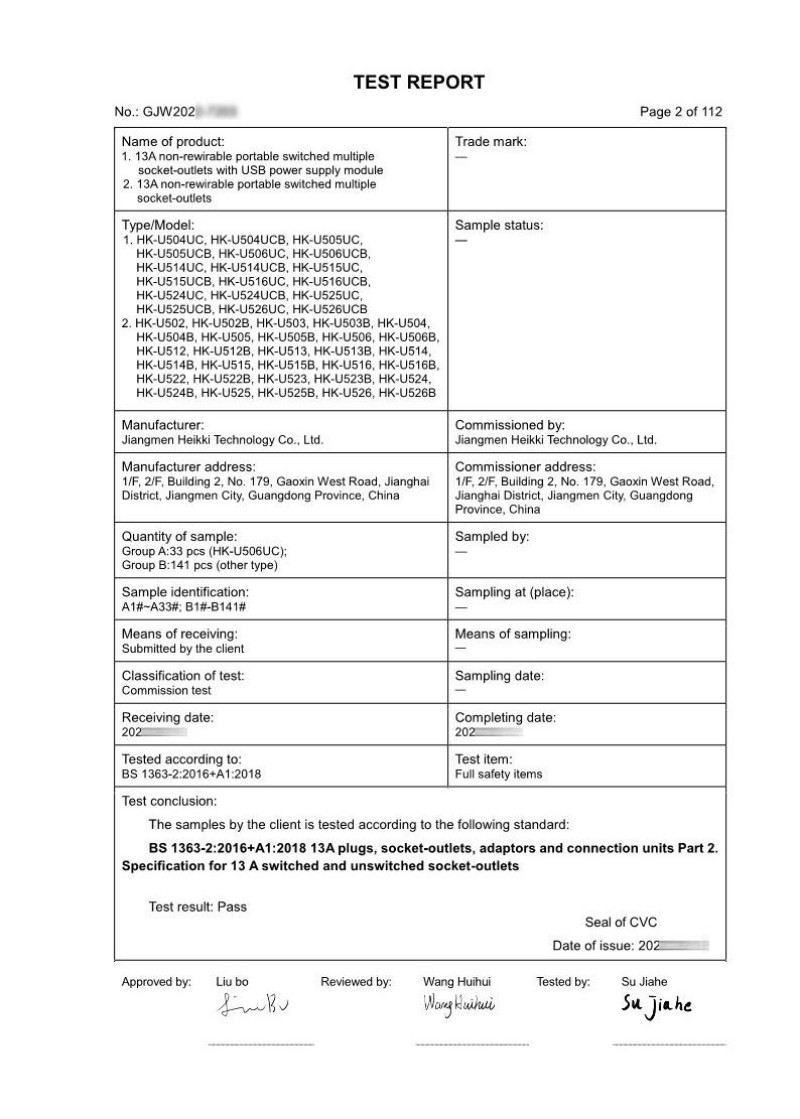
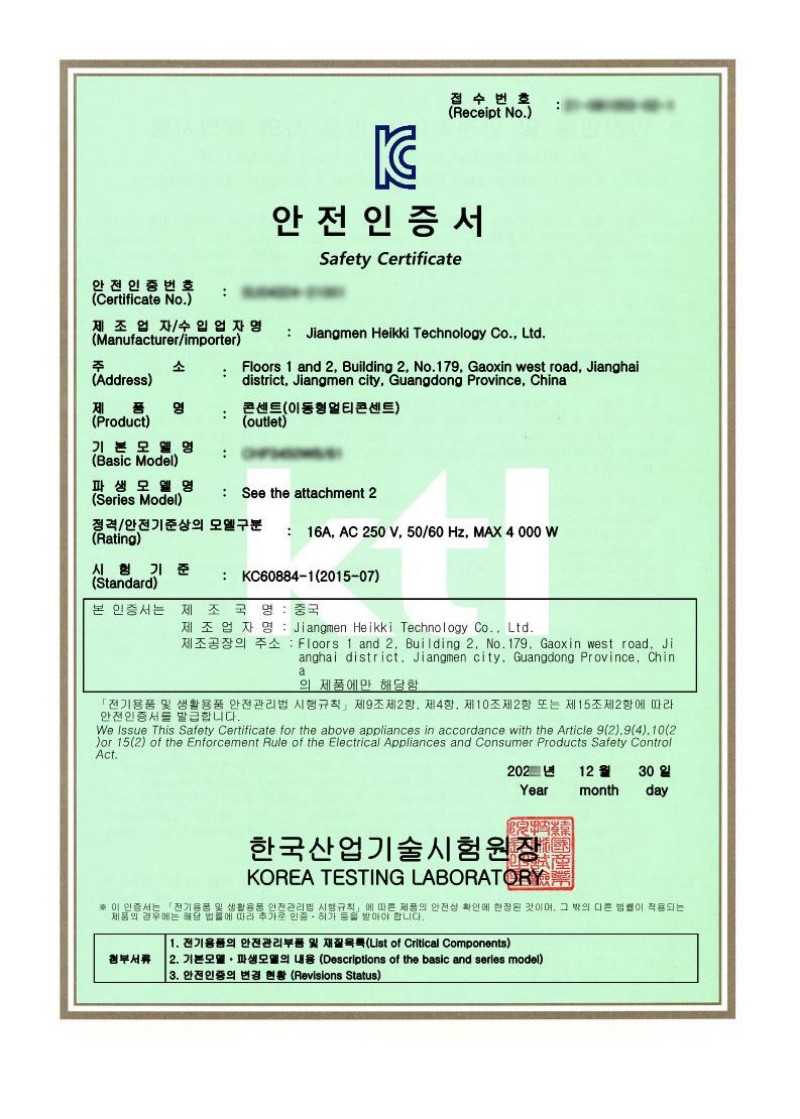
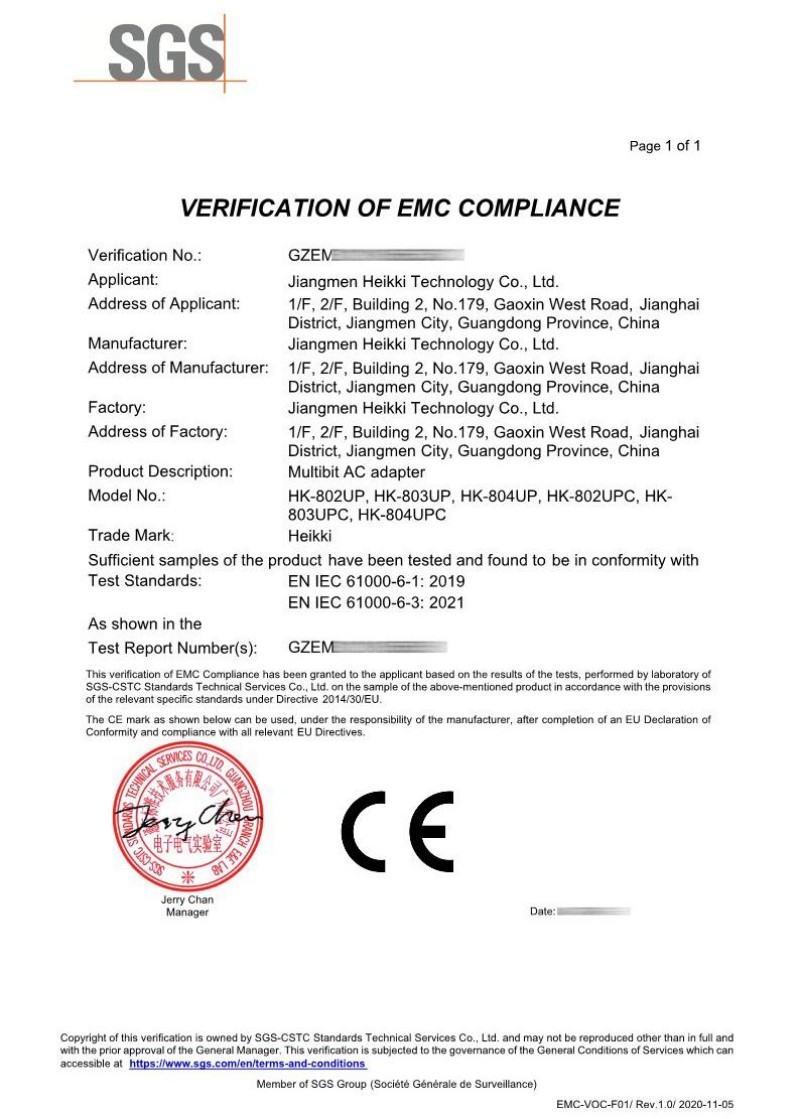
Risk mitigation in international electrical import starts with certified test documentation. Heikki's power socket portfolio holds accredited market certifications for the Middle East, Europe, the Americas, Asia, and Africa.
Engineered Scenarios: Meeting Critical Electrical Load Demands
Different operational environments demand balanced thermal dissipation, mechanical impact defense, and electrical insulation properties.
Data Infrastructure & Server Rooms
High continuous current loads, continuous heat buildup, and multi-appliance configurations demand UL94 V-0 PC blends that resist prolonged high-temperature exposure without warpage or dielectric loss.
Heavy Industrial & Construction Sites
Demands high Izod impact strength (IK08+ equivalent) to withstand tool impacts, drops, high vibrations, and accidental run-overs without cracking live contact enclosures.
High-Density Smart Homes & Offices
GaN fast chargers and USB Type-C power strip modules generate localized thermal hot spots. Our heat-resistant PC housing prevents thermal discoloration and softens structural degradation.
Cross-Border Travel & Hospitality
Frequent insertion, variable international line voltages (100V–250V), and sliding plug pins demand durable mechanical guide channels and high dielectric endurance against arcing.
Technology Roadmap: Next-Generation Polycarbonate Materials (2025–2030)
Pioneering the intersection of circular economy sustainability, extreme thermal conductivity, and AI-assisted mold cavity rheology.
Post-Consumer Recycled (PCR) PC Blends
Engineering up to 75% recycled PCR-polycarbonate materials that consistently maintain strict UL94 V-0 flame ratings and Glow Wire 750°C requirements, meeting corporate ESG targets without sacrificing mechanical strength.
Thermally Conductive FR Matrixes
Incorporating ceramic micro-fillers and specialized boron nitride compounds into the flame retardant PC matrix, achieving high in-plane thermal conductivity ($>1.2\,\text{W/m}\cdot\text{K}$) to directly dissipate heat from fast-charging circuits.
AI-Simulated Cavity Rheology
Utilizing predictive finite-element mold flow analysis to dynamically model gate velocity, melt temperature gradients, and shear rates, preventing localized flame-retardant additive segregation and weak weld lines.
Frequently Asked Questions for Electrical Importers & Engineers
Detailed technical answers addressing compliance verifications, material science comparisons, tooling capabilities, and custom OEM program execution.
Why is flame retardant PC preferred over traditional ABS or PC/ABS blends for high-load power strips?
While generic ABS (Acrylonitrile Butadiene Styrene) offers low cost and ease of injection, it has a lower heat deflection temperature (typically around 80°C–85°C) and releases combustible styrene monomers during thermal breakdown. Even flame-retardant ABS often requires high halogen loading, which can produce toxic, corrosive hydrogen halide smoke.
In contrast, virgin flame retardant Polycarbonate provides a heat deflection temperature above 130°C–140°C, self-extinguishing char formation without halogens, superior glow wire performance (GWFI up to 850°C/960°C per IEC 60695-2-12), and robust impact resistance against cracking under severe dropped-tool testing.
What is the difference between UL94 V-0, V-1, and V-2 flammability ratings?
Under the standard UL94 vertical burning test protocol, specimens are suspended over dry surgical cotton and exposed to an open burner flame for two successive 10-second intervals:
- UL94 V-0: Flaming combustion extinguishes within 10 seconds of flame removal; no test specimens produce flaming droplets that ignite the surgical cotton. Total flaming combustion time does not exceed 50 seconds for 5 specimens.
- UL94 V-1: Flaming combustion ceases within 30 seconds; no flaming droplets that ignite cotton; total flaming combustion does not exceed 250 seconds.
- UL94 V-2: Flaming combustion extinguishes within 30 seconds, but flaming drips are permitted to ignite the cotton.
Heikki’s electrical enclosures utilize pure V-0 grade compound to guarantee non-dripping protection.
How does Heikki verify electrical safety and glow-wire compliance in-house?
Our Jiangmen campus houses a dedicated in-house testing facility equipped with calibrated glow-wire test apparatus (IEC 60695-2-10/11), comparative tracking index (CTI) test stations, ball pressure testers (IEC 60695-10-2 at 125°C), high-voltage withstand dielectric testers (3750V AC), temperature-rise test benches, and mechanical cord flexing endurance rigs. Every production batch of power strips undergoes lot-by-lot verification prior to shipment release.
What OEM / ODM customization parameters are available for enterprise buyers?
We provide full-spectrum turnkey OEM and ODM support:
- Customized shell coloring (Pantone matched, high-gloss, fine matte, or spark erosion texture)
- Custom housing tooling (bespoke outer contours, integrated desk mounting clamps, or DIN rail clips)
- Internal conductor configuration (integrated one-piece stamped phosphor bronze copper bars)
- Surge protection circuit modules (up to 3000 Joules MOV ratings with thermal cutoff fuses)
- Charging configurations: GaN PD fast-charge Type-C (20W to 100W) smart power distribution
- Cable customization: Pure oxygen-free copper cords in customizable lengths (1.5m to 10m+) and gauges (0.75mm², 1.0mm², 1.5mm², 14AWG)
Can Heikki assist with obtaining regional safety marks in our target jurisdiction?
Yes. Our engineering and compliance departments work directly with accredited third-party testing institutions (TÜV Rheinland, Intertek, SGS, CQC). Because our core products already maintain baseline CB Scheme reports and design patents, we accelerate regional certification extensions—such as SASO Saber registration for Saudi Arabia, TISI licensing in Thailand, PS Mark audits in the Philippines, KC testing for South Korea, and UKCA compliance for the United Kingdom.
Explore Additional Specialized Power Strip Models
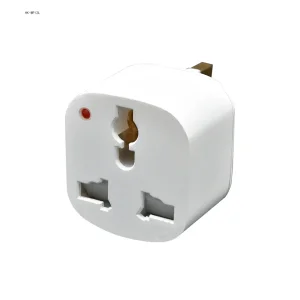
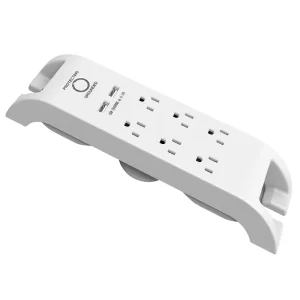
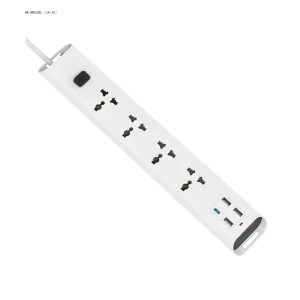
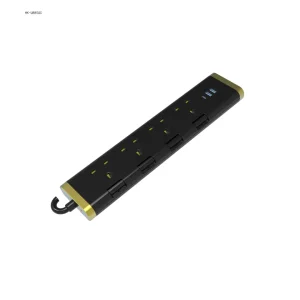
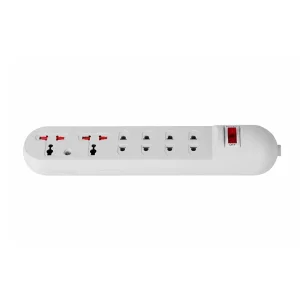
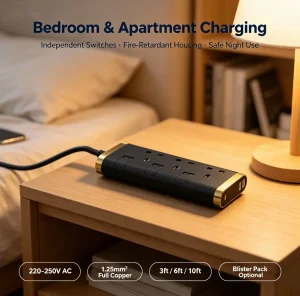
Explore our certified adapters, high-wattage extension leads, and surge-protected distribution units designed for global markets.
Trusted by Global Distribution and Retail Networks
Heikki manufactures power strips and electrical accessories distributed across premier global hypermarkets, specialized electrical wholesalers, and multinational retail chains.