
What Is an Extension Socket and How Does It Work
Table of Contents
- Extension Socket Defined: A Portable Unit That Adds Multiple Power Outlets
- Main Components: Plug, Cable, Contacts, Housing, and Protective Features
- How It Works: Conductors Deliver Mains Power to Parallel Outlet Contacts
- IEC 60884-1 Scope: Household Plugs and Outlets Rated up to 440 V AC, 32 A
- Choosing and Using One Safely: Match Supply Voltage and Total Load Ratings
- FAQS
- Conclusion
- Related Posts
An Extension Socket looks simple: a row of outlets, a cable, and a switch. Yet it changes how electricity reaches everyday devices. Inside, metal conductors connect each outlet to the incoming supply. The socket does not create extra electrical capacity; it divides access to the same circuit. That distinction matters.
Safety data makes the point tangible. The Electrical Safety Foundation International (ESFI) reports that extension cords are linked to about 3,300 residential fires each year in the United States. The U.S. Consumer Product Safety Commission has also reported thousands of emergency-room injuries associated with extension cords annually. These figures concern extension cords broadly, not every extension socket. Still, they show why cable condition, connected load, and placement deserve attention. A warm plug or a cable pinched beneath a chair is not just a small inconvenience.
ESFI president Brett Brenner’s safety guidance emphasizes that extension cords are intended for temporary use, not as permanent wiring. That is a paraphrase, not a direct quotation. It is a useful principle for understanding an Extension Socket: convenience has limits. In this guide, we will explain how its internal connections work, how switches and overload protection differ, and what to check before plugging in appliances. A power strip may look sturdy on a desk, but its rating label and the devices connected to it matter more than its number of outlets. The details can be easy to overlook. That deserves a second look.
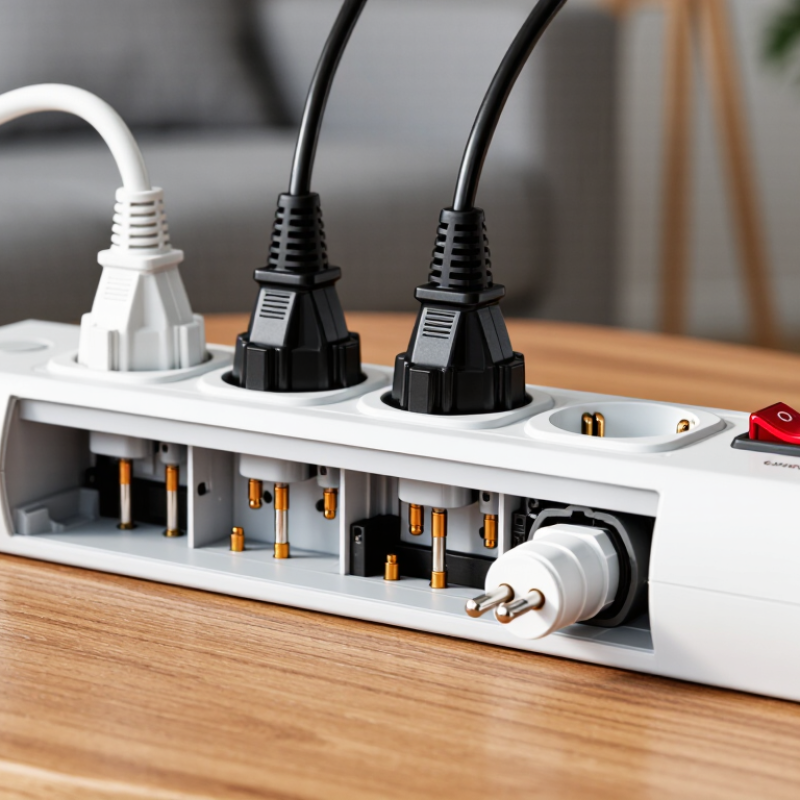
Extension Socket Defined: A Portable Unit That Adds Multiple Power Outlets
An extension socket is a portable unit that adds multiple power outlets where a wall socket is inconvenient. It usually has a short cable, a molded plug, and several sockets in one compact housing. Place one beside a desk, for example, and a lamp, monitor, and charger can share a nearby supply point. It does not create extra electrical capacity. The total load still depends on the rating shown on the unit and the wall circuit.
Inside, insulated conductors carry electricity from the plug to each outlet. Some units also include an on-off switch, a resettable breaker, or surge protection; features vary, so check the label rather than assume. I often find that people focus on the number of sockets and overlook the rating. That matters. A heater and several other high-power appliances can exceed the unit’s limit, even when every outlet fits a plug. Keep the housing uncovered, inspect the cable for damage, and avoid connecting one extension socket to another. A little extra reach is useful. Still, the cable can become awkward across a doorway, and I would rethink the placement before relying on it every day.
Main Components: Plug, Cable, Contacts, Housing, and Protective Features
An extension socket carries mains power from a wall outlet to several devices. Its plug makes the wall connection, while the cable carries current to the socket contacts. The contacts grip each appliance pin; loose or worn contacts can heat up under load. A snug fit matters. Check the marked voltage and current rating, and keep the combined load within that limit.
The housing holds the contacts apart and shields them from accidental touch. It should feel firm, with no cracks, exposed metal, or rattling parts. Some models add overload cut-outs, shutters, or surge protection, but these features do different jobs. A surge protector does not make an overloaded socket safe. Small detail, big consequence.
The Electrical Safety Foundation International reports an estimated 3,300 home fires involving extension cords each year in the United States, with about 50 deaths and 270 injuries. That figure is a useful warning, not a prediction for every socket. Keep the cable uncoiled when carrying substantial loads, avoid running it under rugs, and stop using it if the plug or housing feels unusually warm. A neat-looking unit can still have damaged internal contacts; appearance alone is not a reliable inspection.
How It Works: Conductors Deliver Mains Power to Parallel Outlet Contacts
Inside an extension socket, live and neutral conductors carry mains power from the plug to internal metal contacts. Each outlet connects across the same live and neutral supply. The outlets are wired in parallel, so each appliance receives the supply voltage independently. The current is different: appliances draw what they need, and their currents add together in the shared cable. That is the key. A heater and kettle can place a heavy combined load on a small extension socket. Simple on paper.
The Electrical Safety Foundation International (ESFI) estimates that extension cords are associated with about 3,300 U.S. home fires and 4,000 emergency-room injuries each year. These are broad estimates, not failure rates for every extension socket. Still, they show why sound conductors and secure contacts matter. Check the socket’s rated current and power, and keep the combined load within those limits. A loose contact can heat up, even when the exterior looks normal. This detail is easy to miss. Some extension sockets include overload protection; others do not, so the presence of a switch alone proves little.
What Is an Extension Socket and How Does It Work?
How It Works: Conductors Deliver Mains Power to Parallel Outlet Contacts
In a typical extension socket, conductors connect each outlet’s contacts in parallel, so each plugged-in appliance receives the same nominal supply voltage. The currents drawn by the appliances add together in the extension’s supply conductors. This simplified 120 V example uses estimated current from power ÷ voltage; actual appliances may draw different current during operation or startup.
IEC 60884-1 Scope: Household Plugs and Outlets Rated up to 440 V AC, 32 A
An extension socket carries power from a wall outlet through a flexible cable to one or more portable outlets. Inside, metal contacts connect each outlet to the cable’s live, neutral, and protective-earth conductors. The IEC 60884-1 scope covers household and similar plugs and socket-outlets rated up to 440 V AC and 32 A. These are upper scope limits, not a recommended load for every extension socket.
The actual limit is the rating printed on the extension assembly, which may be much lower. Add the power demands of connected appliances, and keep the total within that rating. A warm plug, loose fit, or damaged cable deserves attention. Small details matter. IEC 60884-1:2022 sets requirements for household plugs and outlets, but national adoptions and product markings should also be checked.
Demand makes careful use relevant. The International Energy Agency’s Electricity 2024 report forecast average global electricity-demand growth of 3.4% per year from 2024 to 2026. That figure describes the wider power system, not extension sockets specifically. Still, more electric devices can mean more crowded outlets. A rating label cannot reveal every risk; I would also check cable condition and ventilation, and avoid treating unused sockets as proof of spare capacity.
Choosing and Using One Safely: Match Supply Voltage and Total Load Ratings
An extension socket carries electricity from a wall outlet through a flexible cable to several plug-in devices. It does not increase the power available from the outlet. That matters. Check the socket’s marked voltage against your supply and each appliance’s input rating. A plug adapter may change the shape of a connection, but it does not convert voltage.
The total load is easy to overlook. Add the wattage of devices likely to run at the same time, then compare it with the extension socket’s maximum rating. For example, a 230-volt, 10-amp unit is rated for about 2,300 watts; stay within the label and any lower limit stated for continuous use. Motors and heaters can draw more power than expected. At a desk, a laptop and lamp may seem harmless, while a portable heater changes the calculation quickly.
Check the cable for cuts, crushed sections, or warm plugs. A slight detail. If using a cable reel, follow its instructions about unwinding it; tightly coiled cable can retain heat under load. Keep the unit dry, uncovered, and away from walkways. I find it easy to focus on the number of sockets and forget the shared load. Don’t connect extension sockets in a chain.
FAQS
It is a portable unit that adds several outlets near a desk or table. It does not add electrical capacity.
It usually has a plug, cable, socket contacts, and a protective housing. Some models include a switch or breaker.
Read the voltage and current ratings on the label. Add the wattage of devices used at the same time, then stay within the limit. Easy to overlook.
Check the heater’s wattage against the unit’s rating. A heater can use much more power than a lamp or laptop.
No. Surge protection and overload protection do different jobs. Check the unit’s features.
Look for cuts, crushed cable sections, cracks, loose contacts, or exposed metal. Stop using it if the plug feels unusually warm.
Avoid that. Keep the cable uncovered, dry, and away from walkways. A tidy route can still hide damage.
No. Do not connect them in a chain. One unit should reach the wall outlet directly.
No. It may change the plug shape, but it does not convert voltage. I still find this easy to forget.
Conclusion
An Extension Socket is a portable unit that connects to a mains supply and provides several outlets from a single wall socket. Its main parts include a plug, flexible cable, conductive contacts, an insulating housing, and protective features such as shutters or overload protection, depending on its design. Inside, conductors carry power from the plug to the outlet contacts, which are connected in parallel so each outlet receives the supply voltage.
IEC 60884-1 covers household plugs and socket-outlets rated up to 440 V AC and 32 A. When choosing an extension socket, check that its voltage rating matches the supply and that its current and power limits suit the devices you plan to connect. Add up the load of all connected devices and keep it within the extension socket’s rating. Inspect the cable and housing before use, and avoid using a damaged unit.
Blog Tags: