
10 Best Extension Plug Sockets for Global Buyers
Table of Contents
- Understanding Extension Plug Sockets and Their Common Uses
- How Plug Types, Voltage, and Standards Differ Around the World
- Key Safety Features and Specifications to Compare
- How to Choose an Extension Plug Socket for Your Needs
- 10 Best Extension Plug Sockets for Global Buyers
- FAQS
- Conclusion
- Related Posts
Choosing an Extension Plug Socket for international use takes more than matching a plug shape. Buyers may encounter different outlet designs, voltage systems, and regional standards. A socket that works well at home may not suit a hotel room or workshop abroad. Check the product’s rated voltage, current, plug type, and intended market before buying. Small print matters.
This guide to the 10 Best Extension Plug Sockets for Global Buyers compares practical details, not just appearance. We consider cable length, socket spacing, grounding, switches, housing quality, and available USB ports. A sturdy casing and a cable that reaches the desk without stretching can make daily use easier. So can clearly marked ratings. Useful details.
Surge protection may help with certain electrical disturbances, but it does not make every setup safe or compatible. Buyers should verify the manufacturer’s specifications and follow local guidance for installation and use. Avoid overloading sockets, and keep extension products away from moisture unless their labeling specifically permits that setting. One detail can be missed: “universal” does not always mean suitable for every device or country. The comparisons ahead aim to make those trade-offs easier to see, though no single model fits every buyer. Check your devices first.
Understanding Extension Plug Sockets and Their Common Uses
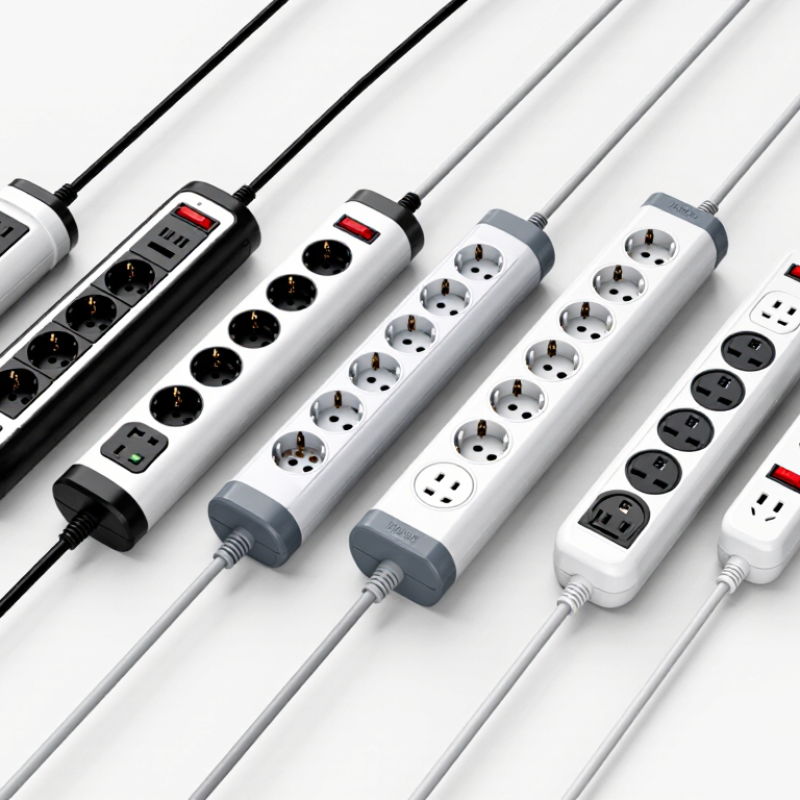
An extension plug socket brings several outlets to a more convenient spot, using a cable connected to a wall supply. In a home office, it can serve a laptop, desk lamp, and monitor when fixed outlets sit behind a heavy desk. In a workshop, a longer lead may reach a bench without moving the equipment. Small details matter.
Common designs include compact multi-outlet blocks, cable reels, and travel-oriented sockets. A reel can keep spare cable tidy, but it should be unwound when its instructions require this during heavier use. Some models add USB ports or surge protection. These features serve different needs: USB ports provide charging, while surge protection is intended to limit certain voltage spikes. Neither feature increases the socket’s safe power capacity.
For international buyers, plug shape is only one part of compatibility. Check the product’s voltage, frequency, current, and total wattage ratings against the supply and connected devices. Confirm that grounding is suitable where required, and avoid treating a plug adapter as a voltage converter. A loose fit, warm casing, or damaged cable deserves attention. Not always obvious. I have found that choosing by outlet count alone is tempting, but it can overlook cable length, spacing, and the actual load. Use the manufacturer’s instructions, especially with heaters or other high-power appliances.
How Plug Types, Voltage, and Standards Differ Around the World
A socket that fits is not automatically a safe match. The International Electrotechnical Commission’s World Plugs reference identifies 15 plug types used worldwide, including Type A in North America and Type G in the United Kingdom. That variety affects pin shape, grounding, and socket compatibility. Small differences matter. A plug adapter changes the connection shape; it does not convert voltage or frequency.
Check the appliance label and the extension socket’s rated voltage and current before use. IEC 60038 sets standard voltage values for electrical systems, but local supply still varies: Japan commonly uses 100 volts, while many European countries use 230 volts. Frequency also differs, often 50 or 60 hertz. The wrong combination can overheat equipment or cause it to operate poorly. A neat-looking universal outlet is not proof of protection. Look for clear ratings, grounding provisions, and conformity with the destination market’s applicable safety standard. Product labels can be confusing, and I would verify them rather than guess. For buyers, the country of use matters as much as the socket’s listed plug types.
Key Safety Features and Specifications to Compare
For global buyers, “universal” sockets deserve a closer look. Plug shapes, voltage, and frequency vary by market, so confirm the extension’s rated input and output match the devices you will connect. Check the maximum current and wattage, not just the number of outlets. A kettle and laptop may fit side by side but draw very different loads. IEC 60884-2-7 covers cord extension sets; buyers should also check which national approvals apply in their destination market. Those details matter.
Safety features should be visible and specific. Look for grounding where required, child-resistant shutters, overload protection, and a resettable circuit breaker. A thermal cut-off can add protection if heat builds up, but it is not a substitute for correct loading. Cable length and conductor size also affect suitability; a long, thin cable can heat under heavy demand. Keep the rating label. It is easy to overlook. NFPA’s Home Electrical Fires report estimates that U.S. fire departments responded to an average of 24,200 home fires involving electrical distribution or lighting equipment each year from 2015 to 2019. These figures are not specific to extension sockets, but they underline the value of sound electrical equipment. Compare certification marks against the relevant market’s requirements, and inspect the plug, cable, and socket faces for damage. A feature list alone cannot prove build quality; that is where buyers may need to ask harder questions.
How to Choose an Extension Plug Socket for Your Needs
Choosing an extension plug socket starts with the equipment you will connect. Check the destination country’s voltage, frequency, plug shape, and rated current; a physical fit does not guarantee electrical compatibility. Match the socket’s current rating to the combined load of your devices, and choose a grounded model when your equipment requires grounding. Cable length matters, too. A longer lead can be convenient, but tightly coiled or undersized cable may overheat under heavy loads. For computers or sensitive electronics, consider surge protection and check its stated protection rating.
CPSC safety materials have cited estimates of about 3,300 residential fires caused by extension cords annually in the United States. These are U.S. estimates, not a global rate, but they underline why load ratings and cable condition deserve attention. Look for clear specifications, recognized safety certification for the destination market, and a robust plug that sits firmly in the wall outlet. I would also inspect the cable jacket and strain relief; a loose joint is easy to overlook.
Tips: Leave spare sockets unused rather than stacking adapters. Keep the lead away from rugs, damp areas, and door hinges. Unplug it before checking for damage. If the socket feels warm during normal use, stop and reassess the total load. A tidy cable is not automatically a safe one.
10 Best Extension Plug Sockets for Global Buyers: How to Choose One for Your Needs
Typical nominal mains voltage in selected markets
Check the voltage and plug type where you plan to use an extension socket, then confirm its rated voltage and current match your appliances. Values shown are typical nominal supplies; standards and local conditions can vary, so verify the requirements for your specific location and device.
10 Best Extension Plug Sockets for Global Buyers
Choosing an extension plug socket for international use takes more than matching the plug shape. Check the socket configuration, rated voltage, current, grounding, and cable length against the devices you plan to connect. A compact unit may suit a bedside lamp, while a grounded model with spaced outlets can better accommodate bulky chargers. “Universal” does not always mean compatible with every plug or suitable for every appliance.
Safety deserves close attention. NFPA’s Home Electrical Fires report, covering 2015–2019, estimates that electrical distribution or lighting equipment was involved in about 34,000 U.S. home fires annually. This figure does not mean extension sockets caused every fire, but it highlights why ratings and condition matter. Look for clear product markings and credible conformity documentation. Avoid overloading outlets, connecting extension units together, or using a socket with heat damage, loose contacts, or a frayed cable.
Tips: Read the rating. Match it to your appliance. For travel, confirm whether you need a plug adapter or a voltage converter; they perform different functions. Check the socket’s dimensions, switch access, and cable reach before buying. A small compromise is easy to miss: the right plug may still block an adjacent outlet.
10 Best Extension Plug Sockets for Global Buyers
| Rank | Socket Configuration | Typical Market | Typical Mains Supply | Common Rating or Feature | Best Suited For | Buyer Check |
|---|---|---|---|---|---|---|
| 1 | Type G, BS 1363 | United Kingdom, Ireland, and several other markets | 230 V, 50 Hz | Plugs commonly have a 13 A fuse; extension-lead ratings vary by model. | Homes and offices using compatible Type G appliances. | Check the plug fuse, cable rating, and local conformity marking. |
| 2 | Type F, Schuko | Germany and many other European countries | 230 V, 50 Hz | Common socket and plug systems are rated up to 16 A; grounding uses side contacts. | Grounded appliances with compatible Schuko plugs. | Confirm the appliance plug fits and that the extension socket provides protective earth. |
| 3 | Type E | France, Belgium, Poland, and other markets | 230 V, 50 Hz | Common versions are rated up to 16 A and use a grounding pin in the socket. | Equipment with Type E plugs; many Type E/F hybrid plugs are also compatible. | Check the exact socket configuration and grounding compatibility. |
| 4 | Type B, NEMA 5-15 | United States, Canada, and some neighboring markets | Typically 120 V, 60 Hz | Common receptacles are rated 15 A and include a grounding connection. | Grounded household and office equipment designed for the local supply. | Verify the cord and device voltage ratings; a plug shape alone does not convert voltage. |
| 5 | Type I | Australia, New Zealand, and parts of the Asia-Pacific region | Typically 230 V, 50 Hz | 10 A versions are common; higher-rated variants exist in some markets. | Local appliances and travel setups using a matching Type I plug. | Check the current rating and whether the socket supports the appliance’s grounding pin. |
| 6 | Type A / Type B | Japan | 100 V, 50 or 60 Hz, depending on region | Type A is ungrounded; Type B adds a grounding pin. Ratings depend on the product. | Japanese appliances with matching plugs and voltage requirements. | Confirm frequency and voltage compatibility, especially for motors and heating devices. |
| 7 | Type D / Type M | India and some other markets | Typically 230 V, 50 Hz | Type D is commonly associated with 5 A plugs; Type M with 15 A plugs. | Buyers needing a socket matched to a specific local plug and load. | Do not assume Type D and Type M are interchangeable; check the exact plug and socket rating. |
| 8 | Type N | Brazil | 127 V or 220 V, 60 Hz, depending on location | 10 A and 20 A socket versions are used; the supply voltage varies by area. | Brazilian appliances and installations using the matching Type N configuration. | Check both the local voltage and whether the socket is rated 10 A or 20 A. |
| 9 | Type J | Switzerland and Liechtenstein | 230 V, 50 Hz | Common Type J outlets are rated 10 A; higher-rated Type 23 outlets are distinct. | Swiss-market appliances and compatible grounded plugs. | Check the plug type and rating; a standard Type J socket may not accept every 16 A plug. |
| 10 | Multi-standard travel socket | International travel and temporary use | Depends on the destination supply | Compatibility and maximum load vary widely; many models do not convert voltage. | Low-power devices with a wide input-voltage range, when the socket is explicitly compatible. | Check grounding, local approval, voltage, current, and wattage limits. Avoid high-power appliances unless specifically rated. |
Ratings shown are typical for the listed socket systems, not guaranteed specifications for every extension product. Always follow the product label and local electrical regulations, and ensure the appliance voltage, plug, grounding, and load are compatible with the destination.
FAQS
It brings several outlets closer to equipment. A desk lamp, laptop, and monitor can share one supply point.
No. It changes the plug shape, not voltage or frequency. Check device labels before connecting equipment.
Compare voltage, frequency, current, and wattage ratings with the local supply and connected devices. Plug shape alone is not enough.
No. Look for clear ratings, suitable grounding, and safety approvals for the destination market. A neat fit proves little.
Grounding, child-resistant shutters, overload protection, and a resettable breaker can help. They do not make overloading safe.
Follow its instructions. Some reels must be fully unwound during heavier use because coiled cable can build heat.
No. USB ports charge devices, while surge protection may limit certain voltage spikes. Neither raises the socket’s rated capacity.
Stop using it if the cable is damaged, the plug fits loosely, or the casing feels warm. Small details matter.
No. Check cable length, outlet spacing, and total load. I still find outlet count tempting, but it can hide the important details.
Conclusion
An Extension Plug Socket can make it easier to power several devices from one outlet, whether at home, in an office, or while traveling. Choosing one for international use requires more than checking the number of outlets: plug shapes, electrical voltage, frequency, and regional standards can differ. A socket that fits physically may not be suitable for a device’s electrical requirements, so users should check both the socket’s rating and the device label before connecting equipment.
This guide explains the common uses of extension sockets and compares important features such as overload protection, grounding, outlet spacing, cable length, switches, and durable construction. It also offers practical advice for matching a socket to your location, devices, and everyday needs. The ten options are presented as a starting point for comparing designs and specifications, helping global buyers focus on safe, compatible, and convenient power access.

Blog Tags: